Temple Wedding Invitation Wording: Best Guide (2026)
Key Takeaway: A temple wedding invitation is far more than a card announcing a date and venue. It is the […]

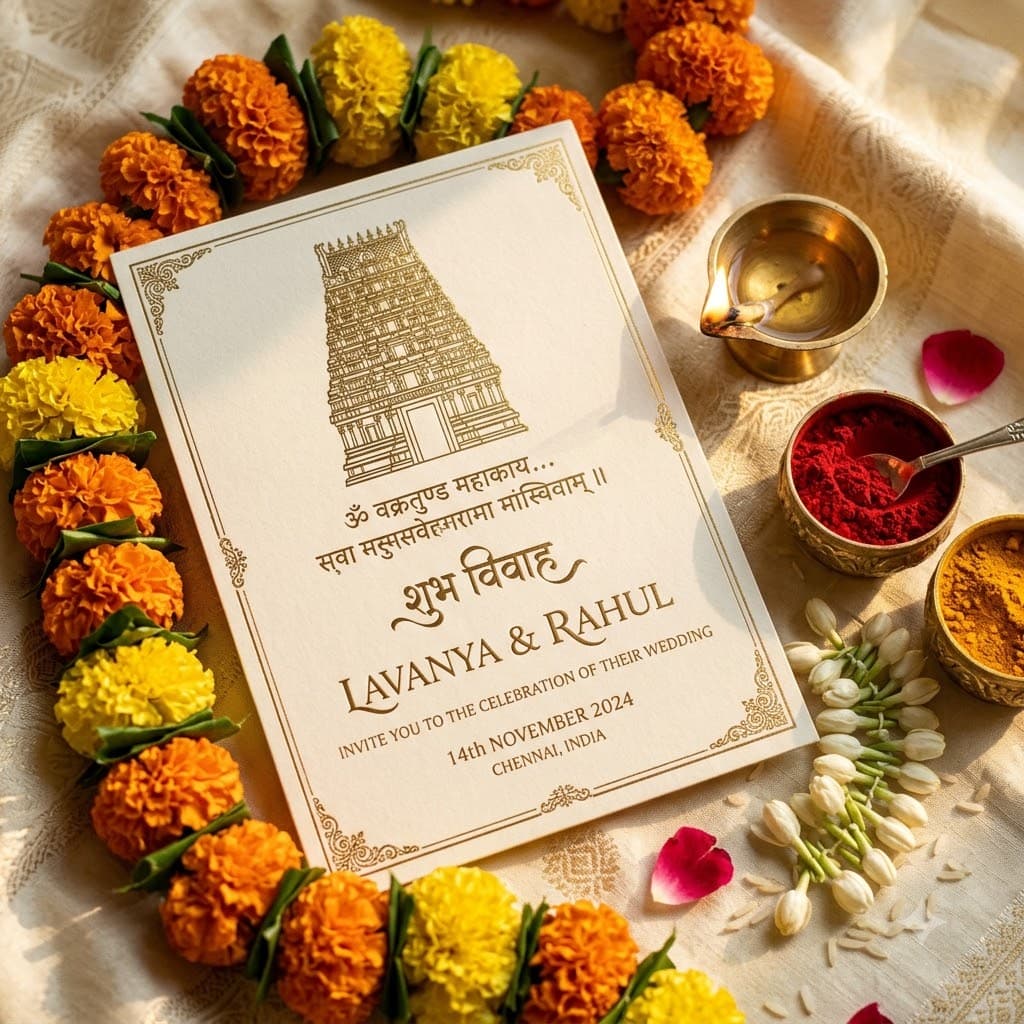
Key Takeaway: A temple wedding invitation is far more than a card announcing a date and venue. It is the first ritual act of your union, carrying gotram, nakshatra, and deity invocations that elders will read as carefully as they read the muhurtham itself. When you honour these details in both print and digital form, you give every guest, near or far, a way to participate in the sanctity of the day.
Table of Contents
- Understanding Temple Wedding Invitation Traditions
- Essential Elements Every Temple Invitation Card Needs
- Kovil Invitation Wording Across South India
- Muhurtham and Nakshatra Details That Honour the Ritual
- Designing a Beautiful South Indian Temple Wedding Card
- Digital Features That Elevate Your Temple Wedding Invitation
- Managing RSVPs and Logistics for Temple Weddings
- Frequently Asked Questions
SACRED TRADITIONS
Understanding Temple Wedding Invitation Traditions
Every temple wedding invitation begins with a moment of humility. Before a single name is printed, the family bows to the deity whose blessing makes the marriage possible. This is why a temple wedding invitation reads less like an event notice and more like a small prayer shared with everyone who receives it.
Why the invitation itself is a sacred act
In most South Indian households, the invitation is treated as an extension of the wedding rites, not a separate marketing exercise. Elders often keep the printed card near the family altar until the wedding day passes. A thoughtfully worded temple wedding invitation signals that the couple and their families understand this weight, and that respect travels through every word on the page.
How temple weddings differ from hall weddings
A temple wedding unfolds inside a consecrated space governed by the temple’s own timings, priests, and customs, which changes what an invitation must communicate. Hall weddings give families flexibility over decor and schedule, but temple weddings ask guests to arrive by a fixed muhurtham, dress modestly, and often remove footwear before entering. A temple marriage invitation therefore carries practical instructions that a banquet hall card rarely needs.
Regional roots across Tamil Nadu, Andhra, Karnataka, and Kerala
Tamil Brahmin families often favour a compact patrika structure with Sanskrit shlokas at the top, while Telugu households tend to include a longer invocation naming both families’ kula devatas. Kannada traditions frequently blend Sanskrit verses with Kannada script for the main text, and Malayalam invitations from temple weddings in Kerala often carry Sanskrit alongside Malayalam translations for elders who read only one script. Understanding these regional differences before drafting a temple wedding invitation prevents the awkward experience of using the wrong family’s format for your own.
CARD ESSENTIALS
Essential Elements Every Temple Invitation Card Needs
A well made temple invitation card follows an order that has stayed consistent for generations, even as printing and now digital formats have changed. Missing even one element can make the card feel incomplete to an elder relative. We think of these elements as a checklist that protects both tradition and clarity.
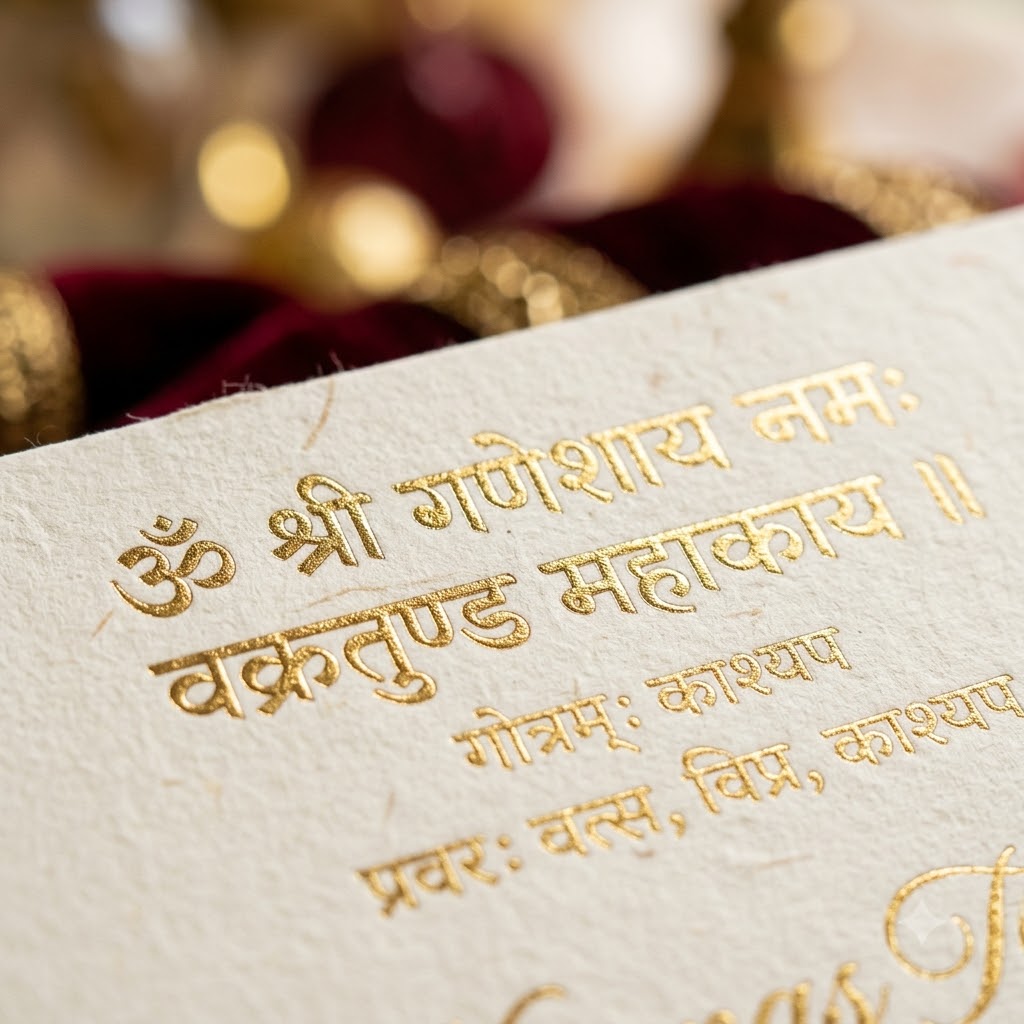
Opening invocation and deity salutation
The card should open with the family deity’s name or a Ganesha invocation, followed by a short verse if the family observes that custom. This opening line sets the tone for the entire temple wedding invitation and should never be treated as decorative filler. Many families ask their priest to confirm the exact wording before it goes to print or design.
Family lineage and gotram details
Both families’ gotram, along with the names of parents and sometimes grandparents, typically follow the invocation. This section confirms lineage for guests who track such details closely, especially in traditional matrimonial circles. A temple invitation card that omits gotram can feel unfinished to guests who expect this information as a matter of course.
Temple name, address, and multi-event schedule
List the exact temple name, its full address, and a clear schedule if there are multiple poojas, a mehndi function, or a reception on separate days. Couples exploring ideas for a broader celebration often review a mehndi ceremony guide to plan pre wedding events that complement the temple rites without overshadowing them. Keeping the temple details prominent, rather than buried under reception information, respects the primary purpose of the day.
Dress code, footwear, and prasadam notes
Temple venues have their own expectations around modest dress and footwear, and a considerate temple marriage invitation states these clearly so guests are not caught unprepared. A short note about prasadam distribution timing also helps guests plan their arrival. These small practical lines are where a card moves from beautiful to genuinely useful.
REGIONAL WORDING
Kovil Invitation Wording Across South India
A kovil invitation is only as strong as its wording, and wording varies more across South India than many couples realise. South Indian wedding invitations traditionally open with a deity invocation and include gotram, nakshatra, and lagnam details as markers of ritual authenticity, and these markers shift in phrasing from one community to the next as documented in regional wedding wording guides. Getting this structure right is one of the most reassuring things you can do for your families.
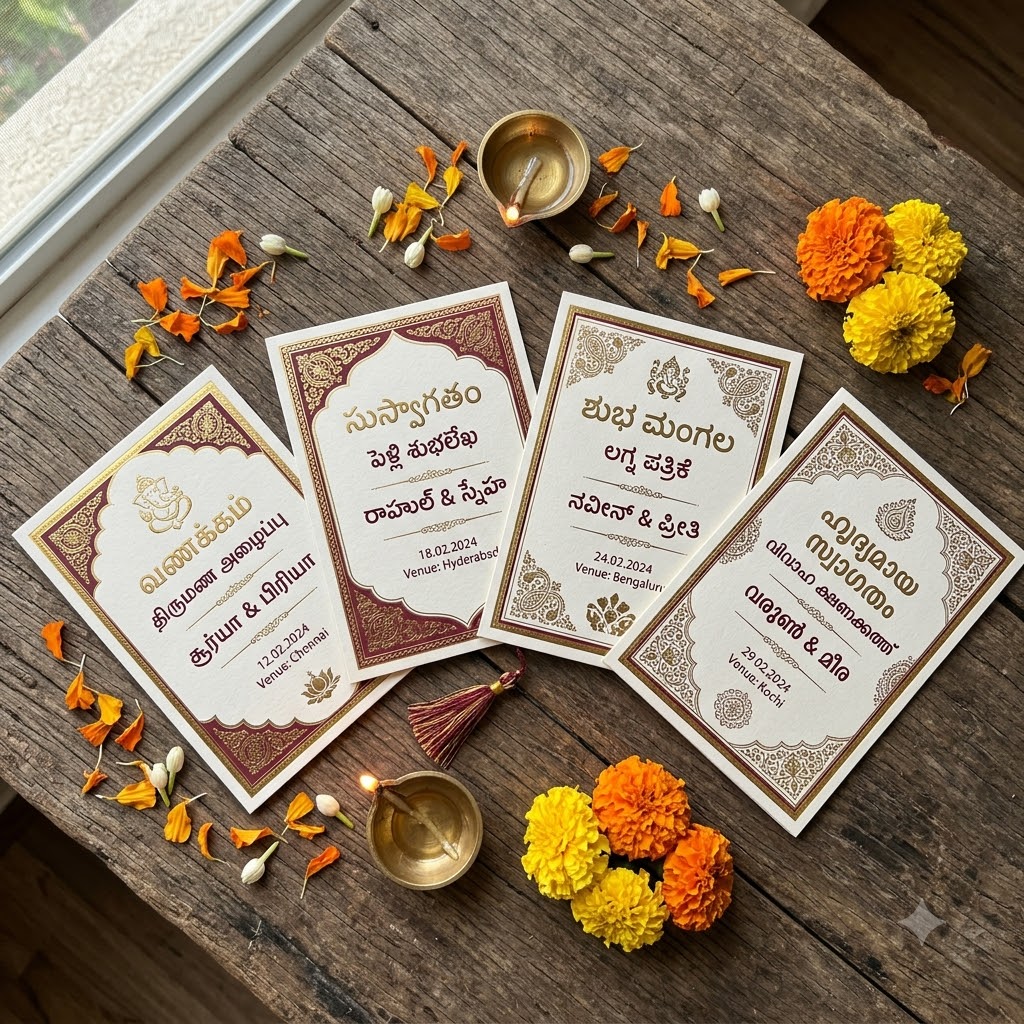
Tamil Brahmin patrika wording structure
A Tamil Brahmin kovil invitation usually opens with a Vinayaka shloka, moves into the names of both families with their gotrams, and then states the nakshatra and lagnam of the couple before the muhurtham time. Couples working on this wording often reference a dedicated Tamil wedding invitation wording guide to keep the sequence correct. The tone stays formal throughout, with English translations added only as a secondary block beneath the Tamil text.
Telugu pelli patrika temple format
Telugu pelli patrikas for temple weddings often name both kula devatas early in the text and include a slightly longer verse section than Tamil formats. Families frequently pair this wording with details from a guide on Telugu wedding rituals to make sure every named ceremony matches the actual event sequence. For couples drafting their own version, a focused Telugu wedding invitation wording resource can save several rounds of priest consultation.
Kannada and Malayalam temple invitation conventions
Kannada temple invitations tend to blend Sanskrit shlokas with Kannada script for the family and event details, keeping the invocation in Devanagari or Kannada lipi depending on family preference. Malayalam conventions in Kerala temple weddings often favour a shorter invocation, with more emphasis placed on the muhurtham nazhika, a traditional Kerala time unit still used alongside standard clock time. Each of these conventions carries its own logic, and a generic template rarely satisfies families used to their specific format.
Bilingual and trilingual wording tips
Many modern families choose a bilingual kovil invitation, placing the vernacular script first for elders and an English translation beneath for younger guests or those living abroad. When a third language is needed, such as Hindi for a mixed regional guest list, keep it as a clearly separated block rather than interleaving lines, since interleaving often breaks the rhythm of the original verses. This layered approach keeps the temple wedding invitation authentic while still being accessible to everyone on the guest list.
RITUAL PRECISION
Muhurtham and Nakshatra Details That Honour the Ritual
Nothing on a temple marriage invitation matters more to elders than the muhurtham, because this is the exact window the priest and family have chosen for the ceremony to be spiritually complete. Muhurtham timing in Hindu weddings is determined by the Panchang and must align the nakshatra, tithi, and lagnam for the ceremony to be considered auspicious according to traditional Panchang based wedding planning practices. Getting this section right is not optional, it is the heart of the invitation.
How to display muhurtham time correctly
Muhurtham time should be printed in both the traditional format, such as a specific nazhika or ghati if the family follows that system, and the standard clock time guests will actually use. Bold or highlight this line so it cannot be missed, since arriving even fifteen minutes late can mean missing the actual ritual moment. A temple wedding invitation that buries this detail in small text does a disservice to the ceremony itself.
Including nakshatra, lagnam, and tithi
The bride and groom’s nakshatra, the lagnam chosen for the wedding, and the tithi should appear together, usually right before or after the muhurtham line. These details confirm to knowledgeable guests, and often to the priest reading the card, that the astrological calculations behind the date were done properly. Skipping them can raise unnecessary questions among elders who expect to see this confirmation in writing.
Avoiding common errors that upset elders
The most common mistake we see is listing only the English calendar date without the corresponding Tamil, Telugu, or other regional calendar reference that many elders still use to cross check auspiciousness. Another frequent error is printing an approximate muhurtham time rather than the exact one given by the priest. Double checking every astrological field with your purohit before finalising your temple wedding invitation prevents avoidable embarrassment later.
TEMPLE AESTHETICS
Designing a Beautiful South Indian Temple Wedding Card
Design choices on a south indian temple wedding card should feel like an extension of the temple itself, not a generic wedding template with a few gold borders added. The goal is visual reverence, where every motif and colour reinforces the sanctity of the occasion. Couples browsing options often start with a dedicated South Indian wedding invitation template built specifically for this purpose.
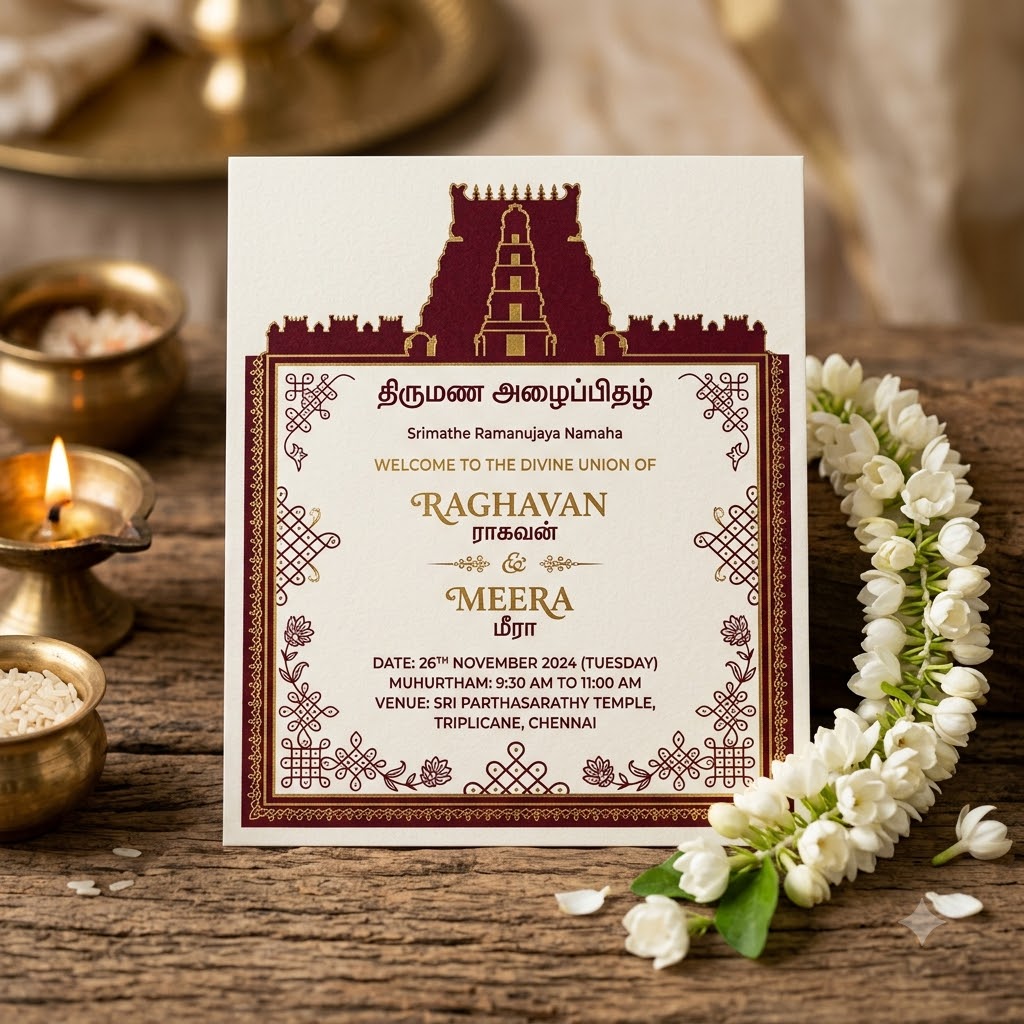
Gopuram and deity motifs that resonate
Gopuram silhouettes, kolam patterns, and subtle depictions of the family deity are the most recognisable motifs on a south indian temple wedding card. These should be used with restraint, framing the text rather than competing with it. A card overloaded with imagery can distract from the wording that matters most to elders.
Colour palettes rooted in temple aesthetics
Deep maroons, temple gold, mustard yellow, and touches of vermillion red are the traditional palette choices, echoing the colours seen on temple walls and traditional silk sarees. Cream or ivory backgrounds work well as a base because they let gold text and motifs stand out without feeling loud. These palettes carry cultural meaning, so it is worth resisting trendy pastel shades that feel disconnected from the setting.
Typography choices for Sanskrit and vernacular scripts
Sanskrit shlokas usually look best in a clean Devanagari font with generous spacing, while vernacular scripts such as Tamil, Telugu, Kannada, or Malayalam need fonts designed for readability at smaller sizes. English translations should use a simple serif or classic font that does not compete visually with the vernacular text above it. Poor script rendering is one of the most common complaints we hear from families reviewing a temple wedding invitation draft.
Balancing tradition with contemporary layout
Modern couples increasingly want a card that feels current without losing its ritual accuracy, and this balance is achievable with careful spacing and a clear visual hierarchy. Families exploring a fully themed option can look at a temple themed wedding website that mirrors gopuram architecture in its digital design. The result is a temple wedding invitation that feels both rooted and refined at once.
DIGITAL ELEVATION
Digital Features That Elevate Your Temple Wedding Invitation
A digital temple wedding invitation should never dilute tradition, it should extend the reach of your ritual to guests who cannot be there in person and add convenience for those who can. Thoughtful digital features let elders keep their printed patrika while giving younger guests a richer, more interactive experience. At MyShaadhi Link, we build these features specifically around the structure of South Indian temple ceremonies, not generic wedding events.
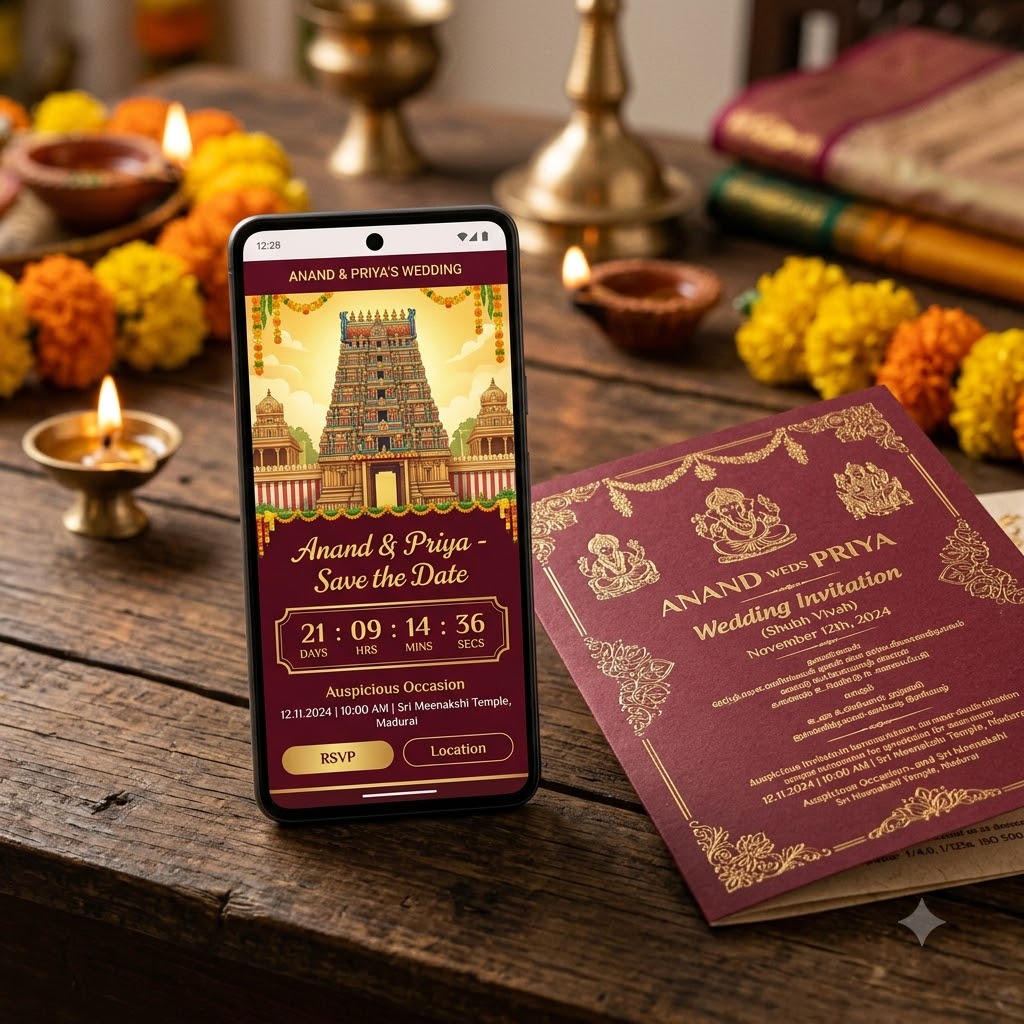
Temple procession hero video and muhurtham countdown
A short hero video of the temple gopuram or the couple’s procession sets an emotional tone the moment a guest opens the link. Pairing it with a live countdown to the exact muhurtham time keeps the sacred timing visible without anyone needing to recheck the printed card. This kind of digital layer works especially well for events with multiple pooja slots across a single day.
Interactive venue map for temple locations
Many temples sit in older parts of towns and cities where addresses alone can confuse out of town guests. An interactive map embedded in the digital temple wedding invitation, with clear parking notes and the nearest entry gate, removes this friction entirely. Couples designing a grander celebration alongside the temple rites sometimes pair this with a royal wedding invitation design for their reception, keeping the temple portion distinct in tone.
Livestream link for NRI and outstation guests
For families with relatives abroad, a livestream link attached to the invitation lets grandparents in another country witness the muhurtham in real time. This has become especially valuable as more couples plan celebrations that must accommodate guests across time zones, a challenge covered in depth in our NRI wedding planning guide. A livestream never replaces presence, but it honours distant relatives who would otherwise miss the ceremony entirely.
WhatsApp sharing and elder friendly access
Because many elders are most comfortable with WhatsApp, a temple wedding invitation that shares cleanly as a single tappable link, without requiring an app download or login, sees far higher open rates among older guests. Large, legible text and a simple one tap RSVP button matter more here than flashy animation. You can see exactly how this works in practice through our page on how digital wedding invitations work, and compare formats on our wedding invitation templates page before choosing a design.
RSVP LOGISTICS
Managing RSVPs and Logistics for Temple Weddings
Temple weddings often run on tighter timelines than hall weddings, since the muhurtham cannot shift to accommodate late arrivals. Good RSVP planning around a temple marriage invitation protects both the ritual schedule and the guest experience. This is where digital tools genuinely earn their place alongside tradition.
Collecting RSVPs for early morning muhurtham events
Many auspicious muhurthams fall in the very early morning hours, and guests need advance notice to plan their travel and rest accordingly. A digital RSVP form attached to the temple wedding invitation, with a clear reminder of the exact reporting time, helps families estimate seating and prasadam quantities well ahead of the day. This single feature often reduces last minute headcount surprises significantly.
Coordinating multiple pooja slots and seating
Temple weddings frequently include a sequence of smaller poojas before the main muhurtham, and not every guest attends every slot. Listing these slots clearly, and allowing guests to indicate which ones they plan to attend, helps families coordinate seating inside often limited temple mandapams. Temple wedding venues require guests to observe specific dress codes and footwear rules, information that is increasingly being included on modern digital invitations as noted in current temple invitation design practices, and this same space works well for slot by slot scheduling notes.
Sending automated reminders and directions
A short automated reminder a day before the muhurtham, including a map link and parking notes, meaningfully reduces late arrivals at temple gates. These reminders feel personal when written warmly rather than as generic notifications, and they matter most for guests travelling from another city. Families who also plan a Christian family member’s wedding within the same season sometimes explore a Christian wedding invitation template to keep each celebration’s tone distinct, and review overall wedding invitation pricing before finalising either format.
Printed patrika for elders, digital link for everyone else
We always recommend keeping a printed patrika for grandparents and senior relatives who value the physical ritual of receiving and preserving an invitation. A digital temple wedding invitation works alongside this, not instead of it, reaching cousins abroad, colleagues, and friends who expect a quick, mobile friendly link. Used together, both formats let every guest, whichever generation they belong to, feel properly invited into the sanctity of your temple wedding.
Create Your Temple Wedding Invitation with MyShaadhi Link
Gotram, nakshatra, muhurtham, and gopuram-inspired design, built specifically for South Indian temple ceremonies, with live RSVP and elder-friendly WhatsApp sharing built in.
COMMON QUESTIONS
Frequently Asked Questions
What makes a temple wedding invitation a sacred document?
A temple wedding invitation functions as the first ritual act of your union, not merely an event notice. Elders treat the printed card as an extension of wedding rites, often placing it near the family altar. Including gotram, nakshatra, and deity invocations signals genuine respect for the consecrated ceremony ahead.
How should gotram and nakshatra appear on a temple invitation card?
List both families’ gotram and the couple’s nakshatra prominently near the top of your temple invitation card, directly below the deity invocation. This placement mirrors traditional patrika structure and allows elders to verify auspiciousness before reading further. Accuracy here carries the same weight as the muhurtham timing itself.
Can a kovil invitation include practical arrival instructions for guests?
Absolutely. A kovil invitation should clearly state the fixed muhurtham time, modest dress requirements, and footwear removal expectations. Unlike banquet hall cards, a temple wedding invitation must prepare guests for a consecrated space with its own rules. Including a simple checklist prevents confusion and honours the temple’s customs respectfully.
When should families finalise wording for a temple marriage invitation?
Finalise wording for your temple marriage invitation at least six weeks before the wedding day. This allows time for priest review of Sanskrit shlokas, regional script verification, and print proofing. Digital versions of your temple wedding invitation can be shared simultaneously, ensuring distant guests receive accurate muhurtham and venue details promptly.
Is regional script important for a south indian temple wedding card?
Regional script is essential for a south indian temple wedding card because elders often read only their native language. Tamil, Telugu, Kannada, and Malayalam households each follow distinct patrika structures. Blending Sanskrit invocations with the appropriate regional script ensures every recipient, regardless of age or literacy, connects fully with the ceremony.
Why do kula devata references strengthen a temple wedding invitation?
Naming both families’ kula devatas in a temple wedding invitation roots the ceremony in ancestral lineage and communal memory. Telugu and Kannada traditions especially value this detail, as it signals continuity across generations. Guests who share the same kula devata often feel a deeper personal connection to the celebration being announced.
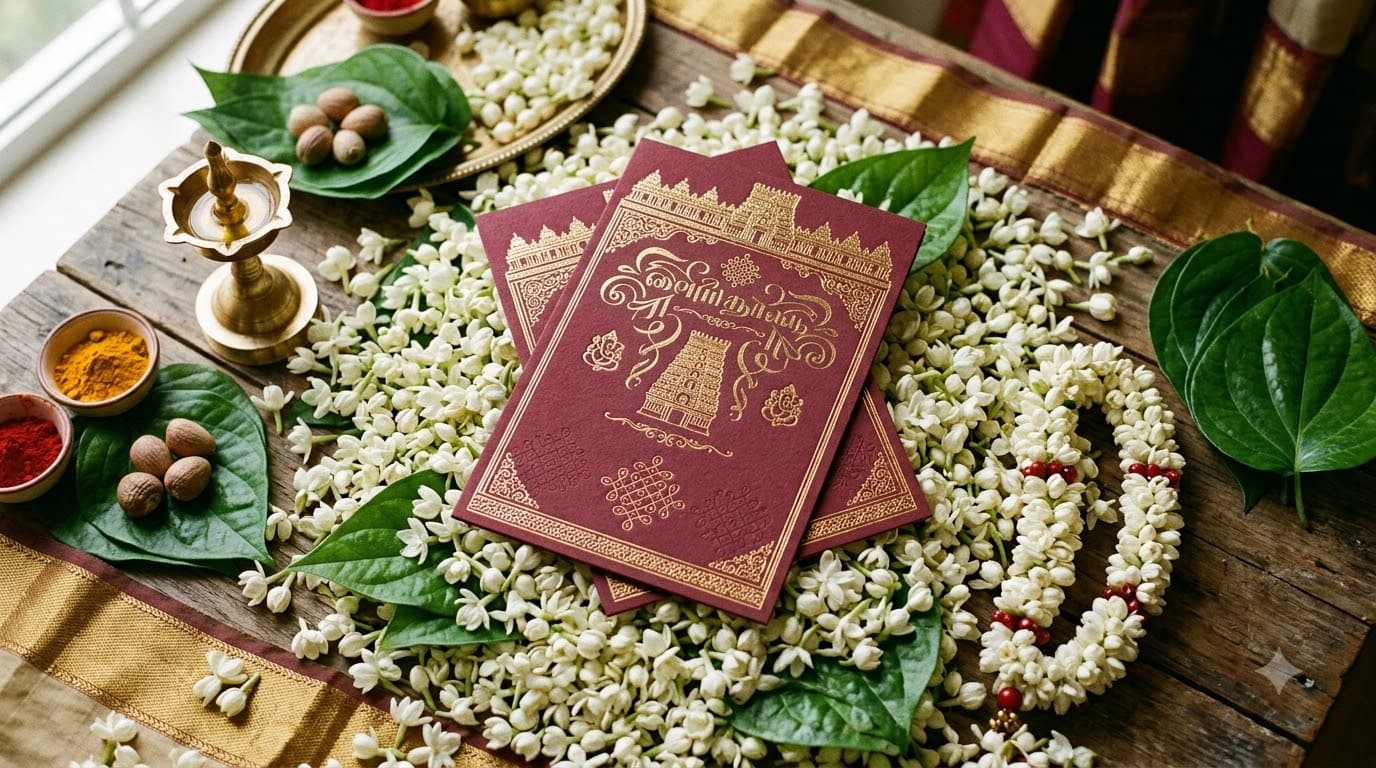 Tamil Weddings
Kovil Pathirikai: 7 Sacred Tips for a Beautiful Tamil Wedding
Key Takeaway: A kovil pathirikai wedding invitation is more than stationery; it is a sacred announcement that carries centuries of […]
Read article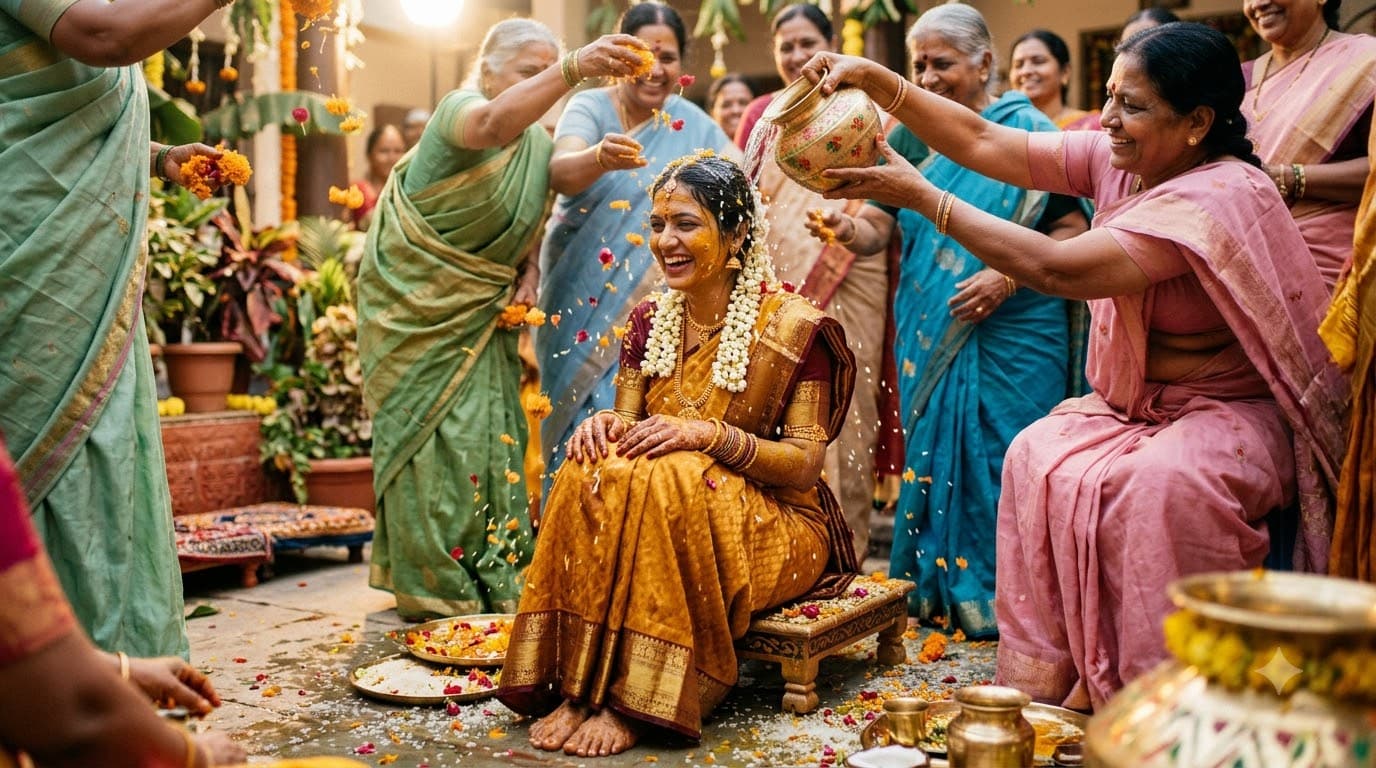 telugu-weddings
Pellikuthuru: 7 Sacred Rituals for a Beautiful Telugu Bride
Pellikuthuru is the sacred Telugu ritual where the bride is bathed in turmeric, anointed, and blessed by family before her wedding. Here’s the complete guide to its meaning, rituals, and planning.
Read article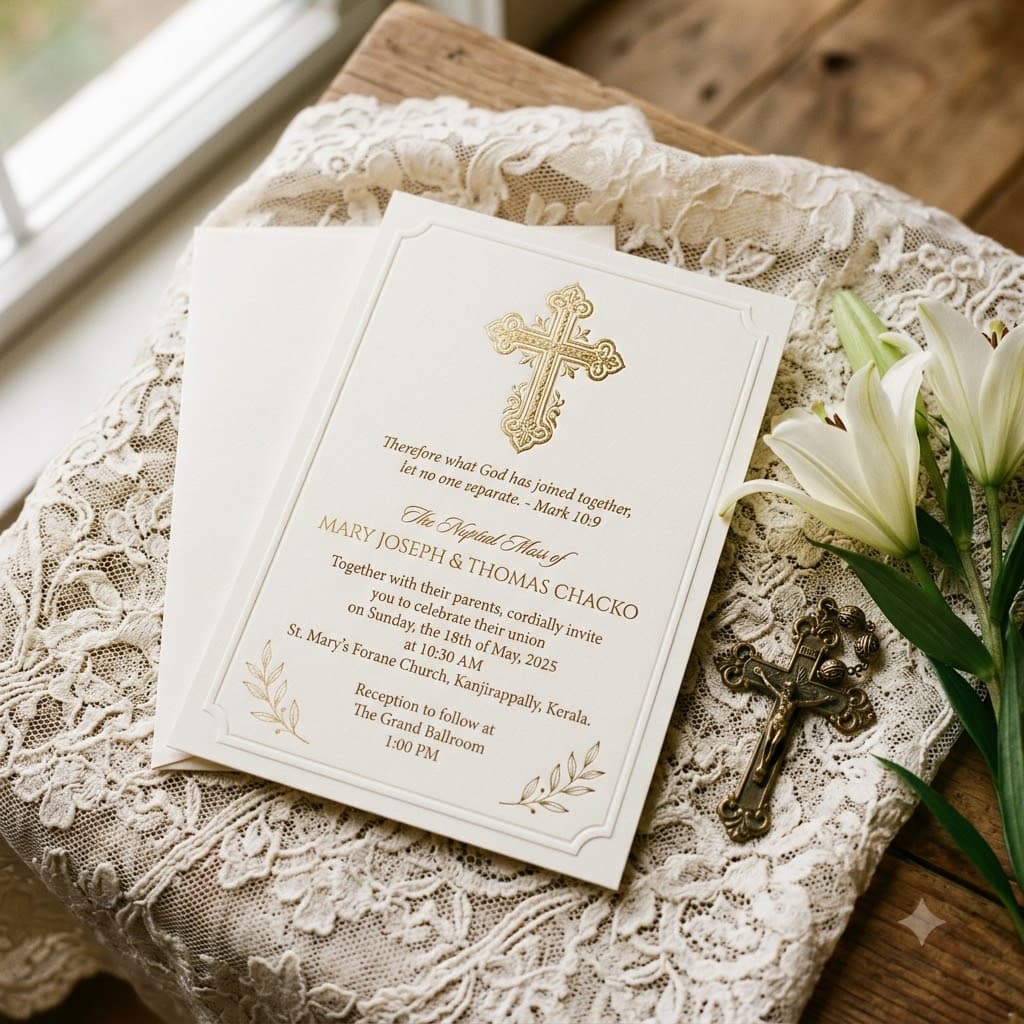 Invitation Ideas
Kerala Christian Wedding Invitation Wording: Best Guide (2026)
Key Takeaway: A well-crafted Kerala Christian wedding invitation wording follows a specific liturgical structure that honors denomination, family hierarchy, and […]
Read articleReady to create your wedding invitation?
Explore our handcrafted templates — designed for South Indian, Christian, and modern weddings. Share via WhatsApp in minutes.
Browse Templates