Pellikuthuru: 7 Sacred Rituals for a Beautiful Telugu Bride
Pellikuthuru is the sacred Telugu ritual where the bride is bathed in turmeric, anointed, and blessed by family before her wedding. Here’s the complete guide to its meaning, rituals, and planning.

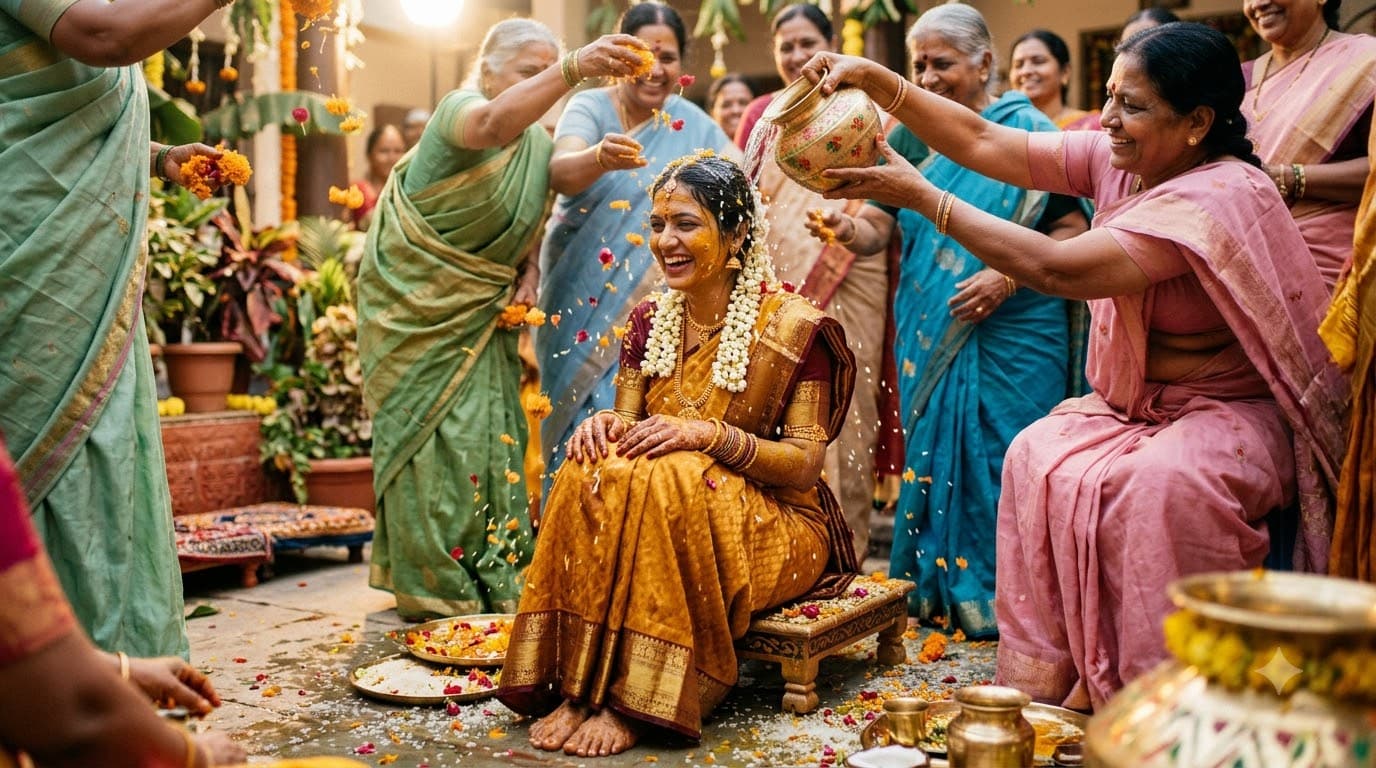
Key Takeaway: Pellikuthuru is the joyful Telugu pre-wedding ritual where the bride is bathed, anointed, and dressed in turmeric and fragrance before the wedding. Rooted in purity, prosperity, and family blessings, the ceremony blends sacred symbolism with warm togetherness. With thoughtful planning, meaningful rituals, and beautiful invites, every couple can honour this cherished tradition in a way that feels both timeless and personal.
Table of Contents
- Understanding Pellikuthuru in Telugu Weddings
- The Sacred Meaning Behind Pellikuthuru
- Step-by-Step Ritual Flow on the Morning
- Who Joins the Ceremony and Their Blessings
- Outfits, Jewellery and Auspicious Decor
- Invitations, Wording and Digital Cards for Pellikuthuru
- Planning Checklist for a Stress-Free Celebration
- Frequently Asked Questions
TIMELESS TRADITIONS
Understanding Pellikuthuru in Telugu Weddings
Across Andhra Pradesh and Telangana, the pellikuthuru function holds a place of deep pride in every family. It marks the bride’s final morning of singlehood and prepares her, body and spirit, for the sacred vows ahead. The ritual is observed with quiet reverence, yet filled with laughter, songs, and shared blessings from the women of both households.
For generations, the ceremony has been a doorway between girlhood and marriage, a moment when a daughter is lovingly handed from her parents into a new family. In many homes, the morning begins with the soft chime of a bell and the fragrance of fresh flowers drifting through the courtyard. Grandmothers, aunts, cousins, and sisters gather around the bride to guide her through each step with care.
Today, modern couples often blend the customs of the pellikuthuru function with contemporary comforts. The core rituals remain sacred, but the styling, photography, and guest experience have become more refined. Families now plan the event alongside other Telugu wedding rituals explained in our detailed library, creating a seamless flow from engagement to reception.
If you are exploring telugu pre-wedding rituals for the first time, think of pellikuthuru as the ceremonial canvas on which the rest of the wedding paints itself. When the bride is purified, dressed, and blessed before dawn, the family believes her path into married life begins with grace. That belief, passed down through countless weddings, is what keeps the tradition alive in every corner of the Telugu diaspora.
Couples living abroad often ask how to recreate the ritual without losing its soul. The answer lies in intention. Whether you host an intimate gathering in a small apartment or a grand hall with extended family, the meaning of pellikuthuru travels beautifully when the heart behind it remains pure. From selecting the right muhurtham to arranging the right items in the brass tub, every detail becomes a quiet prayer.
SYMBOLIC ROOTS
The Sacred Meaning Behind Pellikuthuru
At its heart, the pellikuthuru function is a ritual of purification and invocation. The word itself carries ancient weight, often described as the ceremony where the bride is bathed in milk, turmeric, and fragrance before she steps into married life. Families see it as a way to wash away past burdens and invite fresh beginnings, spiritual clarity, and marital harmony into the couple’s future.
Many couples ask about the pellikuthuru meaning before planning the ritual, and the answer is wonderfully layered. The ceremony combines the symbolism of water for life, turmeric for auspiciousness, oils for softness, and flowers for beauty. Together, these elements form a gentle blessing that prepares the bride emotionally and spiritually, in the same way predawn purification rites appear across many South Indian wedding traditions, each region adapting the symbols to local belief.
One of the most cherished elements is the application of turmeric paste. Turmeric has long been valued in Indian households for its healing, antibacterial, and protective qualities. When a bride is anointed with it, the gesture is both literal and symbolic, offering her health, glow, and shielding from negativity as she begins her new chapter.
The ritual is also deeply communal. Women from the family gather to participate, sing traditional songs, and offer the bride their personal wisdom about love, patience, and partnership. In many families, an elderly aunt or the bride’s own mother leads the sequence, reciting verses passed down through generations. This oral tradition is what makes pellikuthuru feel like a living heritage rather than a scripted event.
For couples planning a mangala snanam alongside the ceremony, the two rituals beautifully complement each other. While pellikuthuru focuses on the bride’s preparation, the mangala snanam often refers to the sacred bath taken by the couple on the wedding morning itself. Many planners treat pellikuthuru as the rehearsal of sanctity, and the wedding-day bath as the official moment of transition. Understanding this sequence helps families design an itinerary that respects tradition while keeping the day smooth.
RITUAL FLOW
Step-by-Step Ritual Flow on the Morning
A thoughtfully sequenced pellikuthuru function feels calm, fragrant, and deeply moving. Begin the morning early, ideally before sunrise, to honour the traditional predawn setting that most families prefer. The quiet of dawn also offers beautiful natural light for photographers and a peaceful mood for prayer.
Set up the ceremonial space the night before. Lay a clean mat, place the brass or copper tub in the centre, and keep all ritual items arranged on a tray. The tray should hold fresh turmeric, sandalwood paste, kumkum, a few coins, a betel leaf with areca nut, a small mirror, comb, bangles, a new blouse piece, and a string of jasmine or roses. Having everything ready allows the morning to unfold without last-minute searching.
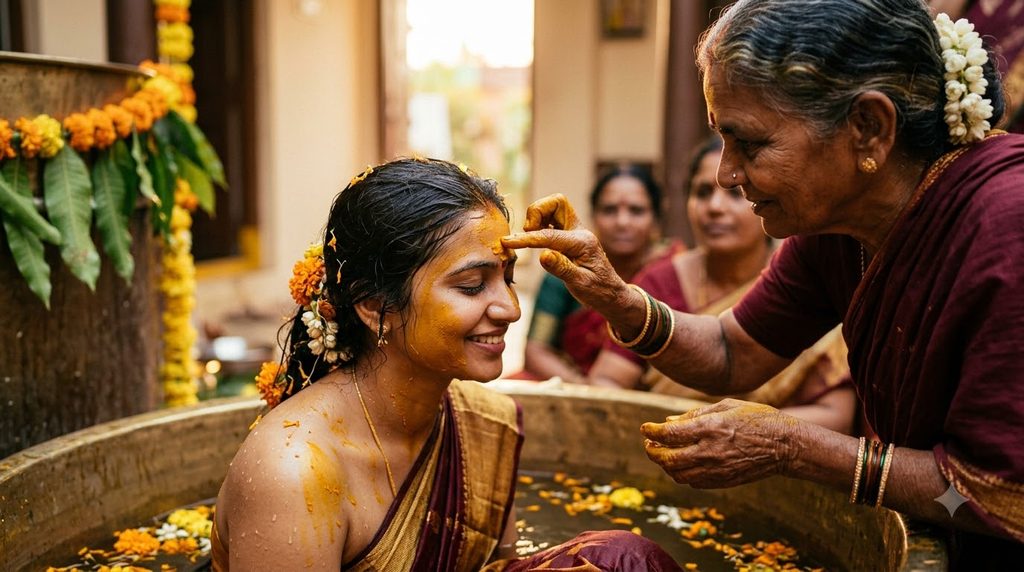
| Step | What Happens |
|---|---|
| 1. Invocation | A lamp is lit and prayers offered; the eldest woman present applies turmeric to the bride’s forehead and feet |
| 2. Ceremonial bathing | Warm water infused with turmeric, sandalwood, and sometimes milk is gently poured over the bride |
| 3. Anointment | The bride is dried with a fresh cotton towel and anointed with fragrant oils |
| 4. Dressing and jewellery | The bride wears a new outfit, with jewellery placed item by item from mangalsutra to toe rings |
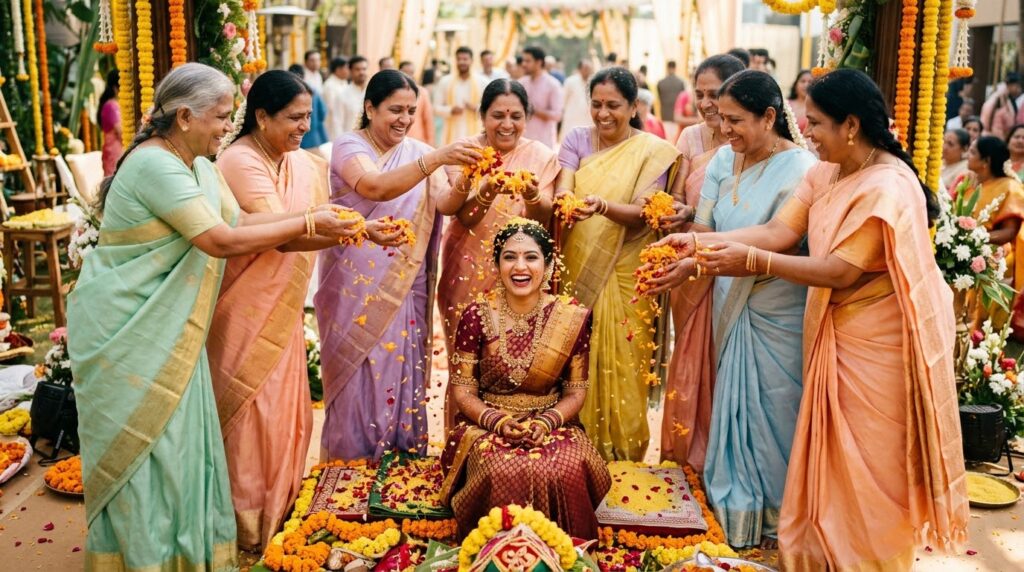
| 5. Blessing circle | Women from both families shower the bride with rice, turmeric-coated betel leaves, and flowers |
The first step is the invocation. Light a small lamp, offer prayers to Lord Vishnu or the family deity, and request blessings for the bride. The eldest woman present then applies a drop of turmeric paste to the bride’s forehead and feet. She may also whisper a short prayer or verse, depending on regional custom. This quiet beginning signals that the ritual has started and invites everyone to participate with reverence.
Next comes the ceremonial bathing. Warm water infused with turmeric, sandalwood, and sometimes a few drops of rose or sandalwood oil is gently poured over the bride. In some homes, milk is also added for its cooling and nourishing symbolism. The bride may be seated on a wooden stool or a small plank during the bath, and the water is collected afterward for symbolic disposal near a plant or temple, never poured carelessly.
After the bath, the bride is anointed with fragrant oils, dried with a fresh cotton towel, and dressed in a new outfit chosen for the occasion. Many brides wear a traditional silk saree, often in yellow, red, or green, paired with a contrast blouse. Jewellery is then placed item by item, beginning with the mangalsutra and ending with toe rings. Each ornament carries a quiet blessing, and elders often narrate the symbolism as they adorn the bride.
The final step is the blessing circle. Women from both families stand around the bride, shower her with rice, turmeric-coated betel leaves, or flower petals, and offer their good wishes. The bride may be asked to step on a small mound of rice or to break a lime placed under the tub, both gestures meant to symbolise stepping into abundance. The morning concludes with a shared breakfast, often featuring traditional sweets and fruits.
For couples weaving telugu pre-wedding rituals into a multi-day celebration, this flow can also be adapted to a smaller gathering. The core elements — invocation, sacred bath, anointment, dressing, and blessings — should always remain intact, even if the scale is intimate.
FAMILY ROLES
Who Joins the Ceremony and Their Blessings
A pellikuthuru function is never a solo affair. The ritual draws its warmth from the women who surround the bride, each carrying a specific role that has been honoured for generations. Understanding these roles helps families plan seating, photography, and even the order of rituals with grace.
The bride’s mother usually leads the morning, supported by her sisters, aunts, and the groom’s maternal relatives. In many homes, the bride’s paternal aunt performs the ceremonial bathing, while the maternal grandmother offers the first piece of jewellery. Married women from both families form a sacred circle, considered symbols of sustained marital harmony and quiet strength.
Young girls and cousins often participate by singing traditional songs, carrying the ritual tray, or helping the bride change into her wedding saree. Their presence keeps the energy light and joyful, balancing the solemnity of the rituals with laughter and teasing. Photographers often capture these candid moments as the most cherished memories of the morning.
Grooms and male family members typically do not enter the bathing space, but they play important roles from a distance. The groom may offer prayers in a separate room, and the bride’s father may perform a small puja in the family shrine for her wellbeing. In joint family homes, the men gather for breakfast after the women complete the ceremony, allowing both sides to begin the day together.
For NRIs planning the ritual abroad, it is wise to identify a small core group of elder women who can guide the sequence. Many families also invite a local priest or temple representative to offer a short prayer before the bath. If you are organising a destination wedding in India, our NRI wedding planning guide offers practical tips on blending traditional roles with logistical realities.
Remember, the spirit of the pellikuthuru function lies in togetherness. Even when distance separates loved ones, a video call or a recorded message from a grandmother can be woven into the ritual, making the bride feel surrounded by her people in spirit. Love, after all, has always travelled across miles.
STYLE AND DETAIL
Outfits, Jewellery and Auspicious Decor
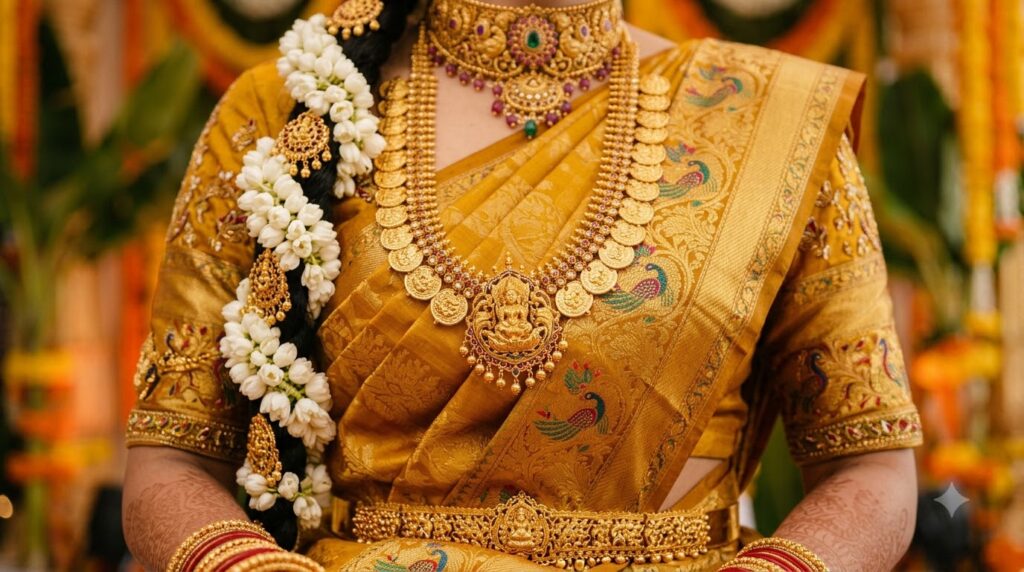
Visual details shape the emotional memory of the morning, and they deserve thoughtful attention. The bride’s attire sets the tone, while the decor frames the experience for everyone in the room. Together, they transform a sacred ritual into a celebration that feels both cinematic and intimate.
For the bride, a traditional silk saree remains the most beloved choice. Colours like mustard yellow, parrot green, deep red, or pastel pink are common, often chosen based on the family’s preference and the wedding muhurtham. The saree is usually paired with a freshly stitched blouse, traditional gold or temple jewellery, and fresh flowers woven into the hair. Many brides also wear a small garland of jasmine or roses, which adds fragrance and softness.
Jewellery selection carries deep symbolism. The maang tikka represents the activation of the higher mind, the nose ring signifies honour and dignity, and the bangles represent marital wellbeing. South Indian brides often wear a waist belt, a tradition that traces back to temple sculptures and classical dance forms. Layering the ornaments thoughtfully, rather than wearing every available piece, creates a graceful, timeless look.
For the women attending, a coordinated palette of pastel sarees or simple cotton weaves feels elegant. Choose breathable fabrics for comfort during the early morning rituals. Encourage guests to avoid heavy perfume, since the ceremony relies on the natural fragrance of flowers, sandalwood, and turmeric.
Decor should be minimal, fresh, and meaningful. Begin with a small mandap or floral canopy in the bathing area, using marigolds, roses, jasmine, and banana leaves. Place brass lamps at the entrance and around the tub, and lay a fresh rangoli at the threshold. Avoid heavy props that distract from the ritual — the beauty of pellikuthuru lies in its simplicity.
Photography deserves a gentle approach. Choose a photographer experienced in rituals, and request a mix of wide shots and intimate close-ups. The candid smiles during the blessing circle, the quiet tears of the bride’s mother, and the pride on a grandmother’s face are the frames that families treasure for years.
INVITES AND WORDING
Invitations, Wording and Digital Cards for Pellikuthuru
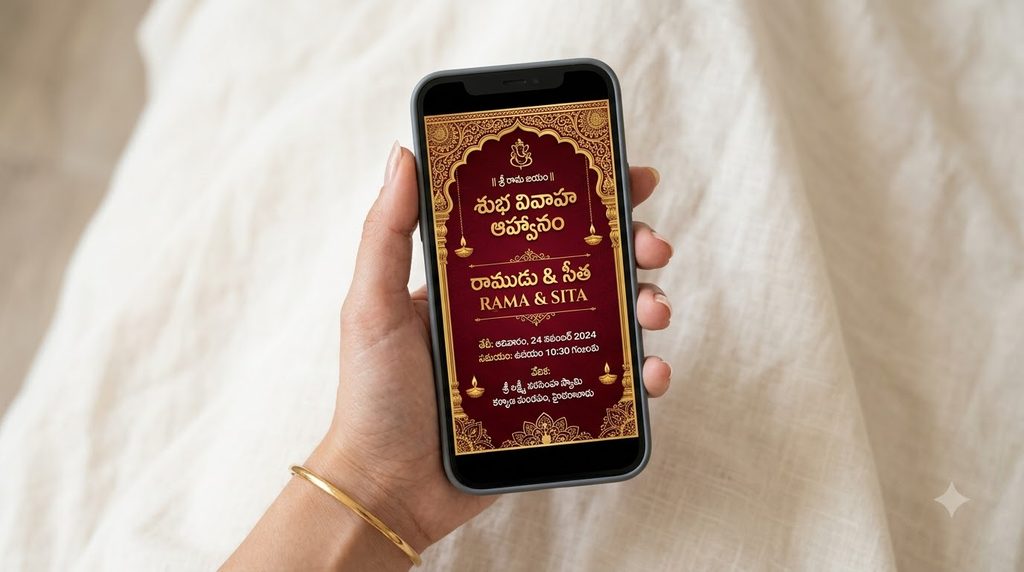
Modern families are reimagining how they announce and honour pre-wedding rituals, and digital invitations have become a beautiful extension of the ceremony itself. A well-designed card carries the first blessing of the wedding, setting expectations, tone, and warmth for everyone invited.
Begin by choosing a template that reflects the spirit of the pellikuthuru function. Our curated South Indian wedding invitation template collection offers traditional motifs, temple-inspired borders, and graceful colour palettes suited to a Telugu celebration. If your family prefers a more regal look, explore our royal wedding invitation design range, which pairs beautifully with a morning ritual framed in gold and ivory tones.
For couples who want the ceremony to feel rooted in heritage, our temple-themed wedding website designs bring sacred symbolism into the digital experience. These templates are designed to feel like a virtual temple corridor, complete with kalash motifs, brass lamp patterns, and gentle gold typography.
Wording for the pellikuthuru function should feel warm, traditional, and welcoming. A simple yet heartfelt phrasing might read, “With the blessings of elders and the grace of the Almighty, we invite you to join us as we honour our beloved bride on the sacred morning of her pellikuthuru.” You may also include the names of the bride and groom, the date, the venue, and a small note on the dress code.
For families who also need Telugu wedding invitation wording in English and Telugu, our blog offers beautifully drafted phrases that blend cultural warmth with modern clarity. If you are hosting a multi-day celebration that includes Tamil family members, our Tamil wedding invitation wording resource offers equally elegant options.
Digital cards also allow you to share practical details like the muhurtham, the dress code, the breakfast menu, and the directions to the venue. Guests appreciate having everything in one place, especially for early morning events. If you would like a deeper look at how digital invites work, our guide on how digital wedding invitations work walks you through the entire experience.
Couples who also plan a mehndi ceremony as part of their pre-wedding journey can design matching cards for each event, creating a cohesive visual story across the celebration. Browse our full wedding invitation templates gallery to find designs that flow seamlessly from pellikuthuru to reception.
PLANNING WISDOM
Planning Checklist for a Stress-Free Celebration
Behind every graceful pellikuthuru function is a calm, well-prepared family. Planning ahead not only reduces stress but also protects the sacred mood of the morning. Here is a practical checklist to help you organise the ritual with care and confidence.
- Lock the muhurtham: Confirm the date and exact predawn time with your family priest, and share it with all guests well in advance — especially NRIs and travelling relatives
- Finalise the guest list: Separate immediate family, extended family, and close friends, since pellikuthuru is usually an intimate, women-led gathering
- Decide on the venue: A home courtyard works well, but a heritage hall or temple courtyard suits larger families needing space, drainage, and ventilation for an open bathing setup
- Prepare the bride’s outfit and jewellery: Finalise the saree, blouse stitching, and jewellery cleaning at least two weeks ahead, with a backup sewing kit on hand
- Assemble the ritual tray: Stock turmeric, kumkum, sandalwood, flowers, and coins, and assign one family member to manage it
- Book a ritual-savvy photographer: Brief them on key moments in advance and have them arrive at least an hour before the muhurtham
- Plan the breakfast menu: Include traditional dishes like pesarattu, upma, and fruits, plus a few dietary-friendly options for guests
- Send digital invitations early: Share the details at least three weeks ahead using our wedding invitation pricing page to pick a plan and track RSVPs for the final headcount
Finally, take a quiet moment the night before to centre yourself and your family. The pellikuthuru function is a celebration of love, heritage, and new beginnings. When the morning arrives, breathe in the fragrance of fresh flowers, hear the soft chime of the bell, and trust that every ritual you perform is already carrying the bride forward into a beautiful life ahead.
Celebrate Every Ritual with MyShaadhi Link
From pellikuthuru to the reception, MyShaadhi Link helps you design digital invitations for every event in your Telugu wedding, complete with RSVP tracking, itineraries, and templates rooted in tradition.
COMMON QUESTIONS
Frequently Asked Questions
What does pellikuthuru meaning signify in Telugu culture?
Pellikuthuru meaning translates to the bride’s ceremonial preparation before marriage. The telugu pre-wedding rituals surrounding this event purify the bride with turmeric, fragrant oils, and family blessings, symbolising her transition from girlhood into married life with grace, prosperity, and spiritual readiness.
How does mangala snanam differ from the pellikuthuru ceremony?
Mangala snanam is the sacred bath performed during telugu pre-wedding rituals, forming one key step within the broader pellikuthuru function. While pellikuthuru covers dressing, anointing, and blessings, mangala snanam focuses specifically on ritual cleansing with turmeric water and herbal preparations to purify the bride.
Can pellikoduku ceremonies happen alongside the bride’s preparation?
Yes, pellikoduku rituals for the groom often run parallel to the bride’s telugu pre-wedding rituals on the same morning. Both families conduct separate purification ceremonies simultaneously, ensuring the couple enters their wedding vows equally blessed, cleansed, and spiritually prepared according to traditional Telugu customs.
When should families schedule telugu pre-wedding rituals ideally?
Families traditionally schedule telugu pre-wedding rituals at an auspicious hour before sunrise, guided by a priest’s muhurtham calculation. Starting early ensures the pellikuthuru function concludes with enough time for the bride to rest, dress fully, and arrive at the wedding venue composed and radiant.
Is the pellikuthuru function suitable for intimate gatherings abroad?
Absolutely. Telugu pre-wedding rituals travel beautifully when intention guides the planning. Families abroad can recreate pellikuthuru with turmeric, fresh flowers, traditional songs, and close relatives joining virtually. The ceremony’s sacred meaning remains fully intact regardless of venue size, location, or the number of guests present.
Why do women lead the pellikuthuru ritual traditionally?
Women lead telugu pre-wedding rituals like pellikuthuru because their blessings carry generational wisdom about marriage, home, and prosperity. Grandmothers, aunts, and sisters anoint the bride with turmeric and guide each sacred step, transferring lived experience and heartfelt love into a ceremony that strengthens family bonds across generations.
 Tamil Weddings
Kovil Pathirikai: 7 Sacred Tips for a Beautiful Tamil Wedding
Key Takeaway: A kovil pathirikai wedding invitation is more than stationery; it is a sacred announcement that carries centuries of […]
Read article Invitation Ideas
Temple Wedding Invitation Wording: Best Guide (2026)
Key Takeaway: A temple wedding invitation is far more than a card announcing a date and venue. It is the […]
Read article Invitation Ideas
Kerala Christian Wedding Invitation Wording: Best Guide (2026)
Key Takeaway: A well-crafted Kerala Christian wedding invitation wording follows a specific liturgical structure that honors denomination, family hierarchy, and […]
Read articleReady to create your wedding invitation?
Explore our handcrafted templates — designed for South Indian, Christian, and modern weddings. Share via WhatsApp in minutes.
Browse Templates