Kovil Pathirikai: 7 Sacred Tips for a Beautiful Tamil Wedding
Key Takeaway: A kovil pathirikai wedding invitation is more than stationery; it is a sacred announcement that carries centuries of […]

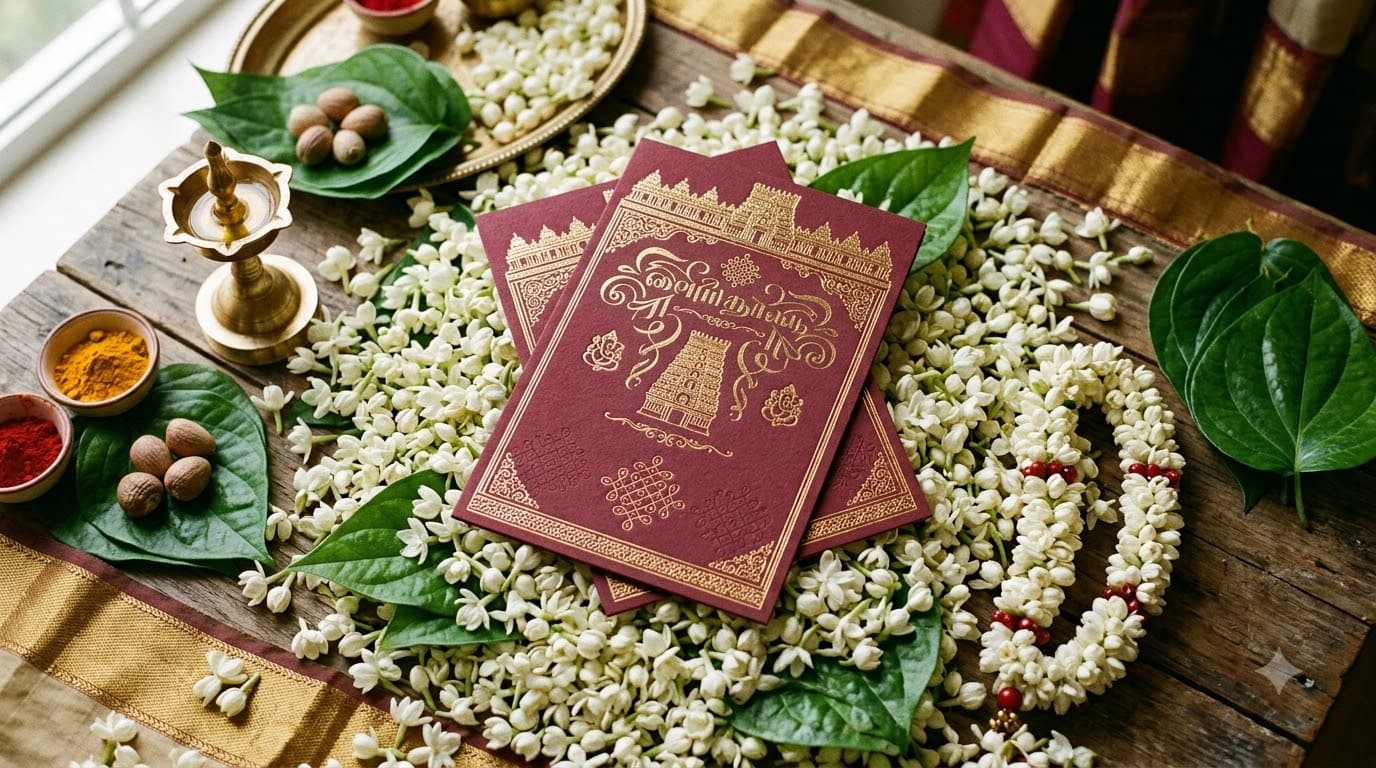
Key Takeaway: A kovil pathirikai wedding invitation is more than stationery; it is a sacred announcement that carries centuries of Tamil tradition into the digital age. The right wording, ritual sequencing, and bilingual design honor heritage while making coordination effortless. With thoughtful personalization, your kovil pathirikai invitation becomes a treasured keepsake for every guest.
Table of Contents
- Introduction to Kovil Pathirikai Wedding Invitations
- Traditional Wording and Ritual Sequencing
- Bilingual Design Options for Couples
- Reception and Ceremony Invitation Formats
- Digital Integration and RSVP Management
- Template Library and Personalization Features
- Why Choose MyShaadhi Link for Your Wedding
- Frequently Asked Questions
CULTURAL FOUNDATION
Introduction to Kovil Pathirikai Wedding Invitations
Across Tamil Nadu and the wider South Indian diaspora, a wedding begins the moment the invitation reaches a family. The kovil pathirikai, often translated as temple letter or temple-style invitation, carries the visual grammar of temple inscriptions, the cadence of classical Tamil, and the reverence of a ceremony rooted in faith. Couples who choose this style signal that their union is not merely a social event but a sacred bond witnessed by family, community, and the divine.
We have seen a quiet but profound shift in how families approach this tradition. Where printed cards once traveled by post or hand delivery, the kovil pathirikai now arrives as a beautifully animated digital page that opens with a soft chant, a kolam pattern, or a temple bell motif. The medium has changed, yet the soul of the announcement remains untouched. Guests still feel the weight of tradition; they simply experience it on a screen.
For couples planning a Tamil wedding today, the invitation sets the tone for every ritual that follows. From the nichayathartham through to the oonjal and the kalyanam, each event has its own language, its own guest list, and its own emotional register. A thoughtfully designed kovil pathirikai respects those distinctions. It tells elders that you honor the old ways, and it tells younger relatives that you have embraced the new.
Traditional Tamil weddings place significant emphasis on kovil pathirikai wording for ceremonial authenticity, and contemporary couples are rediscovering the value of authentic phrasing over generic templates. The invitation becomes a bridge between generations, a document that parents proudly share with their peers and that friends eagerly forward on WhatsApp. In both cases, the message must read beautifully.
We also recognize the practical realities of modern celebrations. Guest lists now span cities, countries, and time zones. Dietary preferences, accessibility needs, and travel logistics all require careful tracking. A well-structured kovil pathirikai invitation, designed for the digital era, answers those needs without compromising its traditional voice. That balance is the heart of what we do, and it is the thread that runs through every section of this guide.
Throughout this article, we will walk you through the wording that brings a kovil pathirikai to life, the sequencing that honors each ritual, and the design choices that make your announcement unforgettable. We will also explore how digital tools can simplify guest management, and why a premium platform can elevate the entire experience from the first glance to the final RSVP.
LANGUAGE AND LINEAGE
Traditional Ceremonies a Kovil Pathirikai Announces
| Ceremony | Meaning | Notes |
|---|---|---|
| Pandhakaal Muhurtham | Seeking blessings for the auspicious start | Conducted a few days before the wedding |
| Sumangali Prarthanai | Prayer for marital prosperity | Performed by married women |
| Nichayathartham (Engagement) | Formal engagement ceremony | Exchange of rings and betrothal |
| Wedding Muhurtham | Main wedding ceremony | Includes Kanyadaanam and Saptapadi |
| Reception | Wedding reception | Feast and celebration |
SACRED SEQUENCE
Traditional Wording and Ritual Sequencing
The wording of a kovil pathirikai follows a quiet architecture. It opens with an invocation, names the families, announces the occasion, and closes with a blessing. Every phrase carries weight, and every line points toward the next step in the wedding journey. When we draft these invitations, we treat each word as a guest of honor, deserving of care and attention.
The nichayathartham, or engagement ceremony, traditionally marks the formal agreement between two families. The invitation for this event should reflect its solemnity. Names of both bride and groom appear with their star and moon signs, a detail that elders scrutinize for astrological alignment. A well-written kovil pathirikai for the nichayathartham reassures both families that traditions have been honored to the letter.
Moving forward to the muhurtham or kalyanam itself, the wording grows more elaborate. This is the centerpiece of the celebration, and the invitation often spans multiple events: the oonjal ceremony, the kanyadaanam, the saptapadi, and the homam. Each sub-event may carry its own line within the kovil pathirikai, or it may be summarized in a poetic verse that gestures toward the full arc of the day. Either approach works, provided the sequencing is clear and the language dignified.
For couples who wish to reference ancient texts, a short verse from a classical Tamil devotional work can elevate the invitation into something almost devotional. We have found that even non-Tamil-speaking guests appreciate the beauty of such verses when paired with a gentle transliteration and translation. The kovil pathirikai becomes a small teaching, introducing loved ones to a heritage they may not yet know.
The reception, while often more contemporary in tone, still benefits from tamil wedding invitation wording that nods to tradition. A warm invitation line to the feast and celebration draws guests in with joy while keeping the tone elegant. Blending the classical with the casual is an art, and it is one we love to practice.
Modern couples seek digital solutions that preserve traditional kovil pathirikai language while enabling easy RSVP tracking, and that is precisely where thoughtful wording meets thoughtful technology. When the language is right, the technology simply disappears, leaving only the beauty of the announcement and the excitement of the celebration.
One practical note: always confirm spellings of names, family titles, and temple names with both sets of parents. A kovil pathirikai is a family document, and accuracy is a form of respect. We encourage couples to print a draft, share it with elders, and invite corrections. The few minutes spent in that exchange often become some of the most meaningful conversations of the wedding planning process.
TWO LANGUAGES, ONE HEART
Bilingual Design Options for Couples
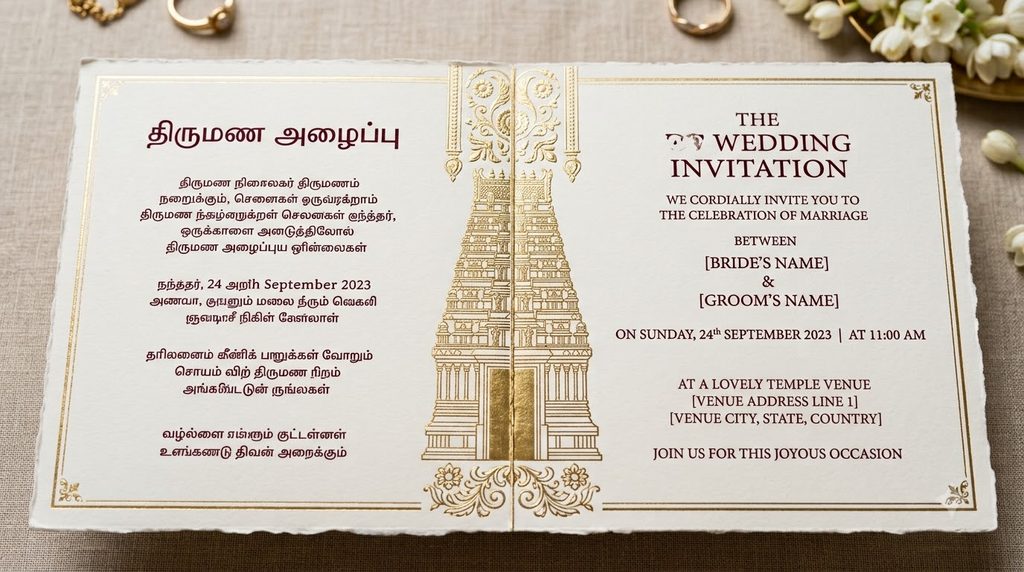
Tamil households today often span multiple languages. Grandparents may speak only Tamil, while cousins may prefer English, and friends from other communities may not read Tamil at all. A bilingual kovil pathirikai invitation honors every guest by presenting the announcement in two voices that complement rather than compete with each other.
The most elegant approach we have seen places Tamil at the center, framed by a subtle English transliteration or translation. The Tamil script carries the gravitas of tradition, while the English text extends warmth to readers who do not read the script. Fonts matter here: a classical Tamil typeface paired with a clean serif in English creates a dialogue between heritage and modernity.
When designing a bilingual kovil pathirikai, layout becomes an act of hospitality. Give the Tamil text generous breathing room, allow the English to flow beside it, and use ornamental dividers inspired by temple architecture to connect the two. Avoid cluttering either language with too many embellishments. The goal is clarity wrapped in beauty, not decoration piled upon decoration.
Color also plays a quiet role. Traditional palettes draw from temple pigments: deep maroon, saffron, gold, parrot green, and ivory. A bilingual layout benefits from this restraint, letting the script and the ornamentation speak rather than the color. That said, contemporary couples often introduce softer hues such as blush, dusty rose, or muted teal, which pair beautifully with the metallic accents of a kovil pathirikai.
We often advise couples to begin with the Tamil wording first, then craft the English translation. This sequence keeps the original tone intact and prevents the translation from drifting into corporate or generic language. The English should read like a love letter from the Tamil, not a separate announcement that happens to share the same card.
For families with members who speak Hindi, Telugu, or Kannada, additional translations can be tucked into a secondary panel or a linked page. This is where digital invitations shine. A single kovil pathirikai can open to reveal multiple language layers, allowing each relative to feel addressed in their mother tongue without overwhelming the primary composition.
Personal touches elevate the bilingual design further. A small glossary explaining the meaning of muhurtham, kanyadaanam, or oonjal adds context for non-Tamil guests. A brief note about the significance of the temple motif or the kolam border invites curiosity. The kovil pathirikai becomes not only an invitation but also an introduction to a culture.
Personalized Tamil invitation templates help couples balance heritage and contemporary aesthetics seamlessly, and bilingual design is where that balance becomes most visible. When done well, the result is an invitation that feels rooted, refined, and welcoming to every guest who receives it.
ONE CELEBRATION, MANY MOMENTS
Digital Integration and RSVP Management Features
| Feature | Description | Benefit | Example |
|---|---|---|---|
| Customizable digital invite | Editable template with Tamil fonts and motifs | Reflects personal style | Add your monogram and wedding date |
| Instant RSVP tracking | Real-time guest response dashboard | Helps plan seating and catering | See confirmations update as guests reply |
| Multilingual support | Tamil and English side-by-side text | Ensures clarity for all guests | Toggle language view on mobile |
| Analytics and reminders | Track opens, clicks, and send automated reminders | Increases response rate | Send a reminder 3 days before the RSVP deadline |
EVENT BY EVENT
Reception and Ceremony Invitation Formats
A Tamil wedding often unfolds over several days, with distinct events that each carry their own character. The reception invitation in Tamil, therefore, is rarely a single document. It is a sequence of announcements, each tailored to its moment. Understanding these formats helps couples communicate clearly and ensures that every guest knows exactly when, where, and how to celebrate with you.
The ceremony invitation, centered on the muhurtham, is the most formal. It is the moment when the couple takes seven sacred steps, and the language of the kovil pathirikai should rise to meet that gravity. Include the date in both Tamil and English calendars, the temple or venue name, the time of the muhurtham, and the names of both families. Elders appreciate these specifics, and younger guests rely on them for planning travel.
The reception invitation in Tamil often follows the ceremony, sometimes on the same evening, sometimes on the following day. The wording here can breathe a little lighter. It is an invitation to feast, to dance, and to bless the couple in person. Include the venue, the dress code if any, and the expected end time so guests can plan comfortably.
For couples hosting a separate engagement or betrothal event, the nichayathartham invitation format calls for its own wording. This invitation is more intimate, often shared with close family and a smaller circle of friends. The kovil pathirikai for this event can include a line about the exchange of rings, the traditional offerings, and the blessings sought from elders on both sides.
Pre-wedding events such as the mehndi or the sangeet add another layer. These gatherings are often more playful, and the invitation can reflect that mood. A reception invitation in Tamil for a mehndi night might blend classical motifs with brighter colors, signaling that this is a celebration of joy before the solemnity of the kalyanam. Many couples choose to share these invitations as a suite, linked together by a shared design language.
Digital invitations make coordinating these multiple formats remarkably simple. A single kovil pathirikai can open into a navigation menu, with each event presented as a beautifully designed card. Guests can click into the ceremony details, scroll to the reception information, and tap through to the mehndi plan, all without leaving the invitation. The experience feels curated and intimate.
We encourage couples to think of the invitation suite as a small narrative. The kovil pathirikai introduces the families. The nichayathartham card announces the promise. The ceremony invitation invites guests to witness the sacred union. The reception invitation in Tamil closes the story with warmth and gratitude. When read together, they tell the tale of a wedding in chapters, each one lovingly prepared.
For families with NRI guests, format flexibility matters even more. Include information about airport proximity, recommended hotels, and visa support if applicable. A reception invitation in Tamil that doubles as a travel guide becomes an instant favorite among international relatives. It signals that you have thought of them, and that their presence truly matters.
TRADITION MEETS TECHNOLOGY
Digital Integration and RSVP Management
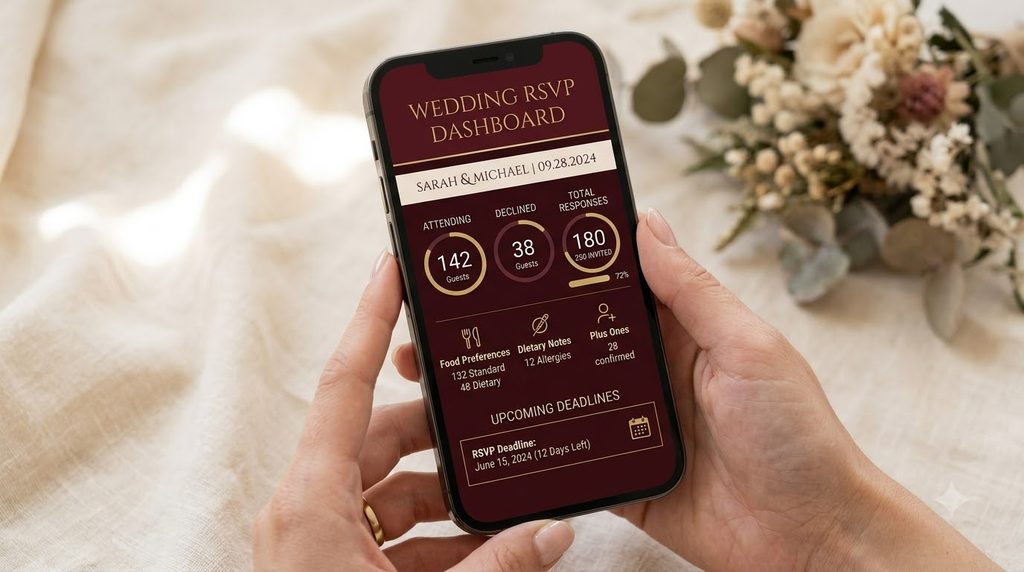
The most beautiful kovil pathirikai in the world accomplishes little if responses arrive scattered across phone calls, text messages, and family conversations. Digital integration solves this quietly and powerfully, turning the invitation itself into the hub for every confirmation, every dietary note, and every heartfelt blessing a loved one wishes to send.
When a guest opens your kovil pathirikai invitation, the RSVP button should feel like a natural extension of the design. A simple tap reveals a graceful form: names, attendance for each event, meal preferences, and a personal message field. The interaction takes less than a minute, yet it captures everything a couple needs to plan with confidence.
Behind the scenes, the system organizes responses into a private dashboard. Couples can see at a glance who has confirmed for the nichayathartham, who will attend the reception, and who has sent warm wishes from afar. Filter by family side, by city, or by event. Export the data into a spreadsheet for the caterer or the venue coordinator. The kovil pathirikai becomes a command center, not just a card.
Notifications arrive in real time. When a beloved uncle from Chennai confirms, a gentle ping reminds you to call him personally. When a college friend writes a heartfelt message in the notes field, you can read it on a quiet evening and feel the love that surrounds your celebration. The technology never replaces human warmth; it simply ensures that warmth is captured and remembered.
For multi-day weddings, digital integration shines brightest. Each event within the kovil pathirikai invitation suite carries its own RSVP logic. Guests can confirm attendance for the ceremony, the reception, or both, with one tap per event. The system tallies automatically, giving couples an accurate headcount for catering, seating, and transportation without endless follow-up calls.
Privacy is paramount in this process. A well-designed platform keeps guest data encrypted and visible only to the couple and, optionally, the immediate family. Unlike public social posts, the kovil pathirikai invitation lives in a controlled environment. Elders who are cautious about online sharing can be reassured by the platform’s security features and clear privacy policies.
We find that digital invitations also serve as a living record. After the wedding, couples can revisit the kovil pathirikai, read every message, and see the full gallery of RSVPs. Some platforms even allow guests to upload photos or short video messages, turning the invitation into a digital guestbook. Years later, this archive becomes a treasured reminder of the love that surrounded the beginning of a new chapter.
Curious about how the experience works from the guest side? You can explore the journey step by step on our guide to how digital wedding invitations work, which walks through every tap and scroll a guest encounters when they receive your kovil pathirikai.
DESIGN THAT TELLS YOUR STORY
Template Library and Personalization Features
The right template is a starting point, not a finished product. The kovil pathirikai templates we offer are designed to honor Tamil aesthetics while remaining flexible enough to reflect each couple’s unique story. When you browse wedding invitation templates, you will find a curated library organized by style, ceremony type, and visual mood.
For couples drawn to traditional elegance, our South Indian wedding invitation template collection captures the essence of temple art. Intricate pillars, divine motifs, and kolam-inspired borders frame your announcement with cultural depth. These templates work beautifully for the nichayathartham and the muhurtham, where classical language and visual heritage belong together.
Couples seeking a more devotional atmosphere often gravitate toward our temple-themed wedding website designs. These templates echo the architecture of Tamil temples, with carved gopuram silhouettes and sanctified color palettes. A kovil pathirikai invitation built on this template feels like an extension of the sacred space where the wedding will be held.
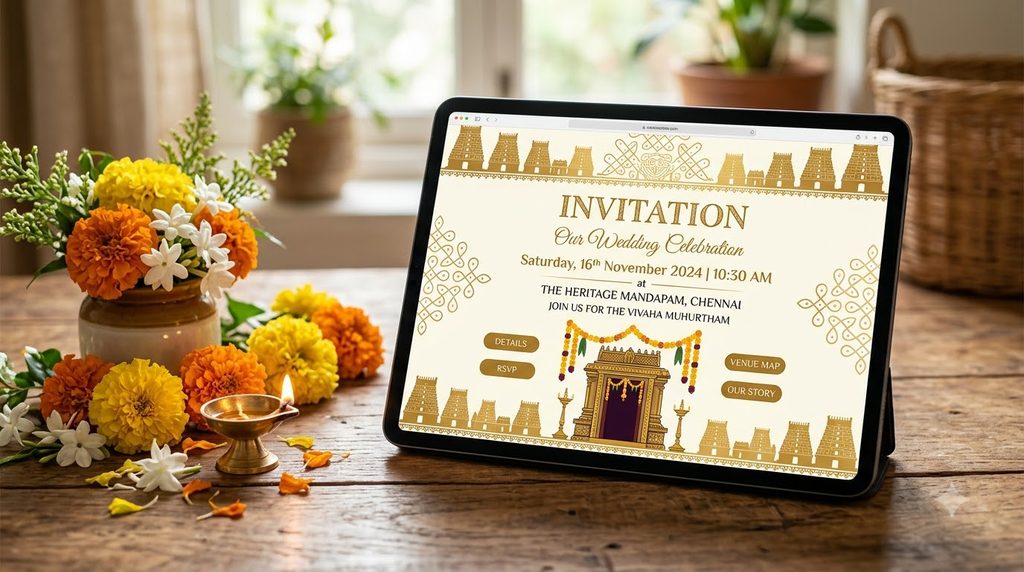
If your celebration leans toward grandeur, the royal wedding invitation design collection offers ornate frames, regal typography, and gilded accents. These designs pair wonderfully with multi-day celebrations that include a grand reception, where the visual richness matches the scale of the event.
For interfaith couples or those blending Tamil traditions with other cultural elements, our Christian wedding invitation template collection demonstrates how the platform accommodates diverse ceremonies while still respecting the kovil pathirikai aesthetic. Cross-cultural families find this flexibility invaluable.
Personalization extends far beyond colors and fonts. Upload your own kolam artwork, your family crest, or a photograph from the roka ceremony. Add a short note about how you met, or a verse from your favorite Tamil poem. Choose your own soundtrack, from classical compositions to contemporary melodies that hold meaning for the two of you. Every element of the kovil pathirikai can be tuned to your taste.
Language customization is equally rich. Type your invitation in Tamil, English, Hindi, Telugu, or any combination. The platform renders each script with appropriate typography and spacing, ensuring that no language feels like an afterthought. Bilingual guests appreciate the care, and monolingual guests find exactly the version they need.
If you want to deepen your understanding of related traditions, our guide on Telugu wedding rituals explained offers a thoughtful companion read for families with cross-regional roots. You may also find inspiration in our Telugu wedding invitation wording resource, which complements our detailed Tamil wedding invitation wording guide.
Couples interested in pre-wedding celebrations can pair their kovil pathirikai with a beautifully designed mehndi ceremony guide page, creating a unified suite across every event. The result is a wedding communication ecosystem that feels intentional and complete.
A TRUSTED PARTNER
Why Choose MyShaadhi Link for Your Wedding
Choosing the right platform for your kovil pathirikai wedding invitation is as important as choosing the right wording. MyShaadhi Link was built specifically for South Indian couples who want their wedding communications to honor tradition while embracing modern convenience. We are not a one-size-fits-all tool; we are a specialized craft shaped by cultural understanding.
Every template in our library is designed by artists who know Tamil iconography intimately. Every word in our draft library has been reviewed by families who have hosted traditional weddings. Every feature, from RSVP tracking to photo galleries, has been refined through feedback from thousands of couples across Tamil Nadu, Kerala, Karnataka, and the global Tamil diaspora.
Our bilingual infrastructure supports Tamil and English natively, with seamless handling of Tamil script rendering, transliteration, and translation. This is not a feature we bolted on; it is the foundation of the platform. When you draft a kovil pathirikai with us, you can trust that the script will display beautifully on every device, and that the language will read with dignity.
We also understand the emotional journey of wedding planning. Our customer support team includes members who have navigated Tamil weddings themselves, who appreciate the significance of the nichayathartham, and who can offer thoughtful suggestions when you feel stuck. We do not simply provide software; we provide partnership.
Predictable costs matter during a season already full of expenses. Our wedding invitation pricing structure is transparent and fair, with no hidden fees or surprise add-ons. You can plan your budget with confidence, knowing that the platform will not introduce stress where there should only be joy.
For couples planning destination weddings or hosting guests from abroad, our NRI wedding planning guide complements the kovil pathirikai invitation beautifully. Together, they form a complete resource for couples navigating the logistics of celebrating across borders.
Most importantly, we believe that a kovil pathirikai wedding invitation should feel like a love letter to your heritage and your future. It should make your parents proud, your grandparents smile, and your friends excited to celebrate. When you choose MyShaadhi Link, you choose a partner committed to making that feeling real, from the first draft to the final blessing.
Create Your Kovil Pathirikai with MyShaadhi Link
From the nichayathartham to the kalyanam, design a bilingual kovil pathirikai that honors tradition, tracks every RSVP, and becomes a keepsake your family treasures for years.
COMMON QUESTIONS
Frequently Asked Questions
What does kovil pathirikai mean?
Kovil pathirikai translates to “temple letter” and refers to a Tamil wedding invitation styled after temple inscriptions, with formal wording, ritual sequencing, and sacred symbolism that frames the wedding as a divinely witnessed union rather than only a social event.
Does a kovil pathirikai need to be written only in Tamil?
No. Most modern families use a bilingual kovil pathirikai, with Tamil carrying the traditional weight of the announcement and an English translation or transliteration alongside it, so relatives and friends who don’t read Tamil still feel fully included.
How is the nichayathartham invitation different from the wedding invitation?
The nichayathartham invitation announces the engagement and is usually more intimate, shared with close family and friends, while the kovil pathirikai for the muhurtham is more formal and elaborate, often naming both families and detailing the full ceremony sequence.
Can a kovil pathirikai cover multiple wedding events at once?
Yes, a digital kovil pathirikai can open into a navigation menu covering the nichayathartham, muhurtham, and reception as separate cards within one invitation, letting guests RSVP to each event individually without needing multiple separate cards.
How does digital RSVP tracking work with a kovil pathirikai?
Guests tap an RSVP button on the invitation and fill in a short form covering attendance, meal preference, and a personal message, which updates a private dashboard in real time so couples can track headcounts by family side, city, or event.
Who should I consult before finalizing kovil pathirikai wording?
Always confirm names, family titles, star and moon sign details, and temple names with both sets of parents before finalizing the wording, since a kovil pathirikai is a family document and accuracy in these details is treated as a form of respect.
 telugu-weddings
Pellikuthuru: 7 Sacred Rituals for a Beautiful Telugu Bride
Pellikuthuru is the sacred Telugu ritual where the bride is bathed in turmeric, anointed, and blessed by family before her wedding. Here’s the complete guide to its meaning, rituals, and planning.
Read article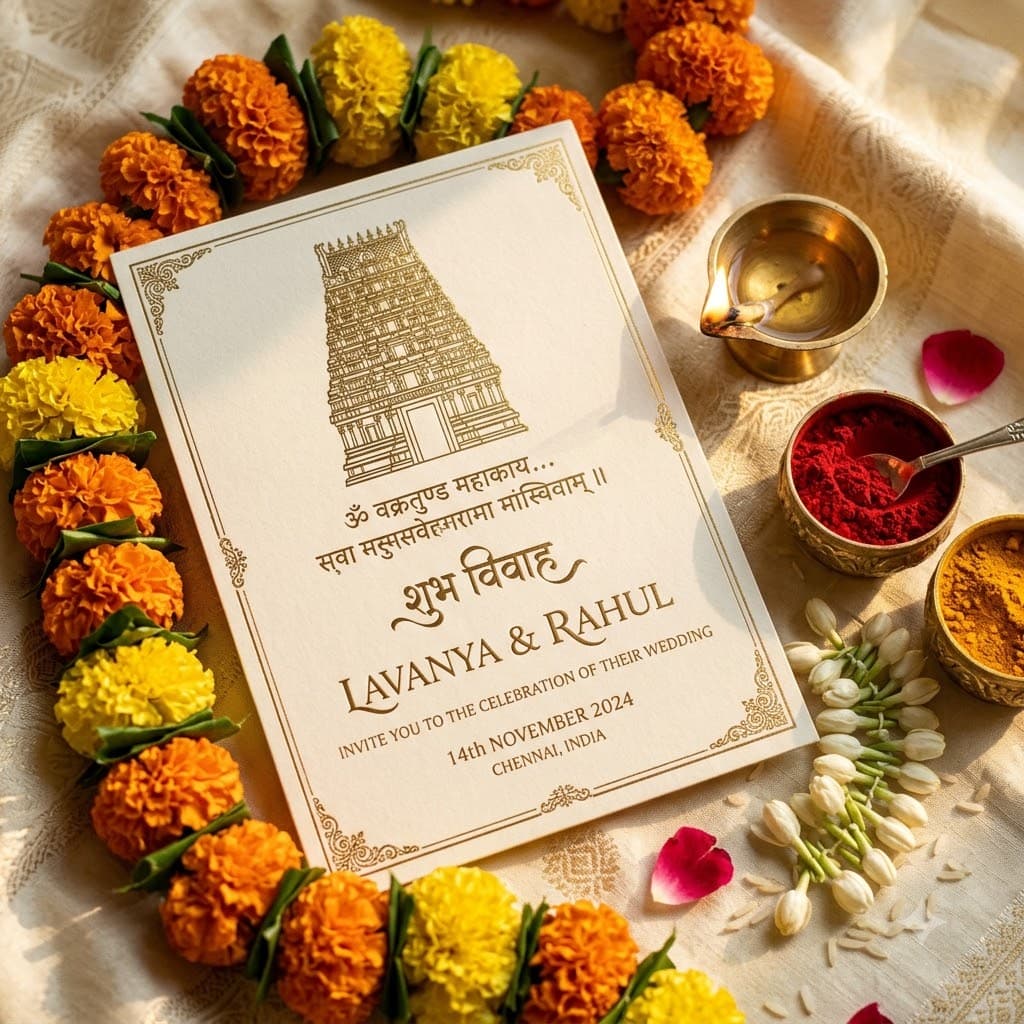 Invitation Ideas
Temple Wedding Invitation Wording: Best Guide (2026)
Key Takeaway: A temple wedding invitation is far more than a card announcing a date and venue. It is the […]
Read article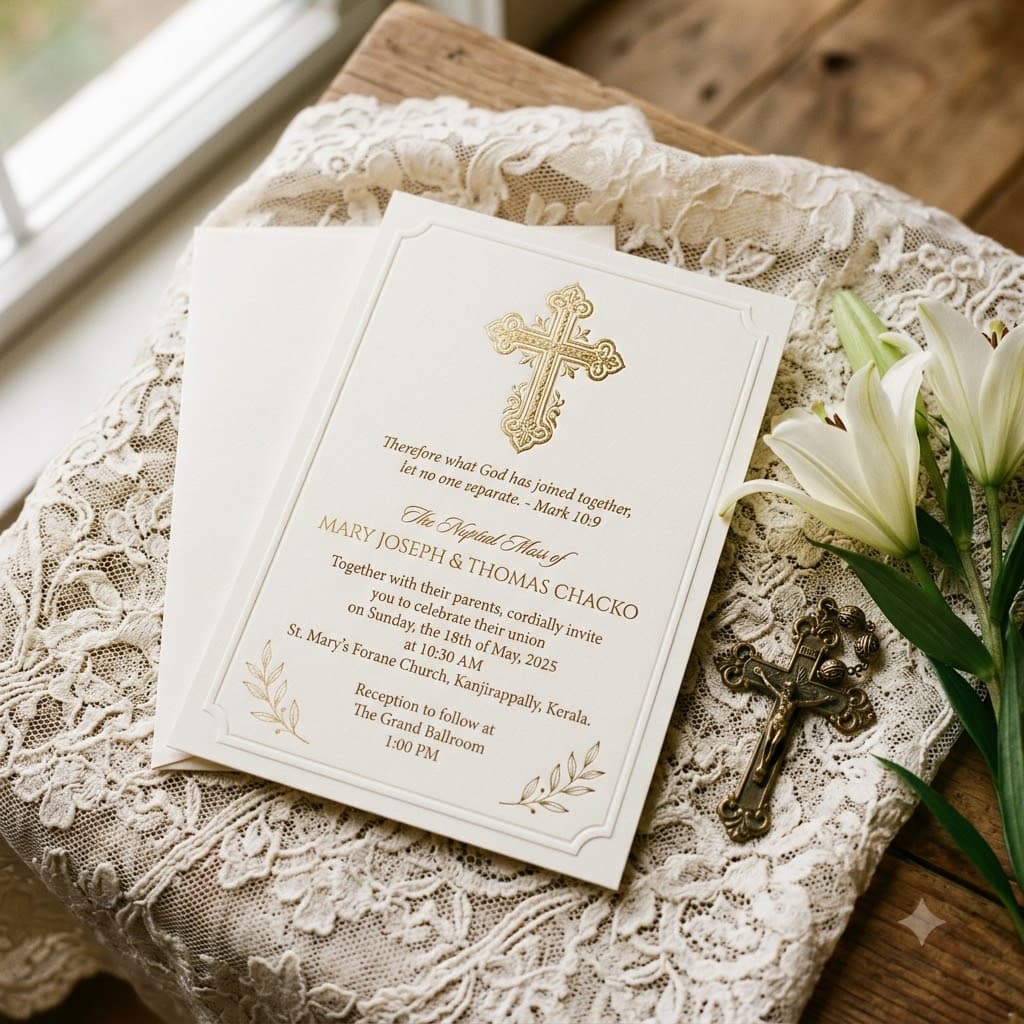 Invitation Ideas
Kerala Christian Wedding Invitation Wording: Best Guide (2026)
Key Takeaway: A well-crafted Kerala Christian wedding invitation wording follows a specific liturgical structure that honors denomination, family hierarchy, and […]
Read articleReady to create your wedding invitation?
Explore our handcrafted templates — designed for South Indian, Christian, and modern weddings. Share via WhatsApp in minutes.
Browse Templates