NRI Wedding Planning: 12-Month Guide to a Stress-Free Indian Wedding from Abroad
Planning an Indian wedding from abroad is a remote-coordination problem, not a bigger version of a local wedding. Here’s a realistic 12-month timeline for NRI couples — from locking the date to collecting RSVPs across time zones.


Key Takeaway: NRI wedding planning is fundamentally a remote-coordination problem, not a bigger version of a local wedding. Between a 10–13 hour time difference, a single pre-wedding trip to India, and two guest lists on two continents, the couples who succeed are the ones who lock their date early and move their invitations, RSVPs, and guest communication online from day one. This guide walks you through a realistic 12-month timeline built for Indian couples living abroad.
Table of Contents
- What Makes NRI Wedding Planning Different
- The 12-Month NRI Wedding Planning Timeline
- Building Your Two Guest Lists
- When to Send: The NRI Invitation Timeline
- Collecting RSVPs Across Time Zones
- Visas, OCI Cards, and Guest Documents
- Marriage Registration for NRI Couples
- What an NRI Wedding Actually Costs
- Planning Your NRI Wedding with MyShaadhi Link
- Frequently Asked Questions
What Makes NRI Wedding Planning Different
THE CONSTRAINTS THAT SHAPE EVERYTHING
India hosts roughly 10 million weddings a year, and the wedding industry is the country’s fourth-largest, with annual spending of around US$130 billion. Almost all of the advice written about that market assumes one thing: that you are in India. For an NRI couple, that assumption breaks immediately.
NRI wedding planning is not simply harder than planning at home — it is a different kind of problem. Three constraints drive every decision you will make.
1. The time difference compresses your working week
India Standard Time sits at UTC+5:30, which puts it 9.5 to 10.5 hours ahead of US Eastern, 12.5 to 13.5 hours ahead of US Pacific, 4.5 to 5.5 hours ahead of the UK, and 4.5 to 5.5 hours behind Australian Eastern time. In practice, a couple in New York has a usable overlap with a vendor in Delhi only in the early morning or late evening — and vendors in India do most of their real work on weekends, which is when they are running other people’s weddings.
The realistic outcome: you get one or two solid planning conversations per week, not one per day. Every decision you defer costs you a week, not an afternoon.
2. You will likely make one pre-wedding trip, not five
Realistic NRI wedding planning assumes a single 7–14 day trip to India before the wedding week itself. That one trip has to carry the venue walkthrough, the caterer tasting, the outfit fittings, the jeweller visit, the photographer meeting, and any paperwork that requires you to be physically present. Sequencing it badly is the single most common NRI planning mistake.
3. Your guest list lives on two continents
Your India-based guests need three to four weeks’ notice and a WhatsApp message. Your overseas guests need three to six months — they are booking international flights, applying for leave, arranging childcare, and in some cases applying for a visa. Treating these two groups as one list is why so many NRI weddings end up with a final headcount that swings by 30% in the last month.
Pro tip: Write your wedding date down as a fixed point before you decide anything else. Overseas guests cannot book flights around a “probably in November” — and airfare to India during peak wedding season climbs steeply after the six-month mark.
The 12-Month NRI Wedding Planning Timeline
MONTH BY MONTH
This NRI wedding planning timeline assumes a wedding in India with guests travelling from abroad. If you are planning a two-country celebration — a reception where you live plus a ceremony in India — run the same track and add the overseas event at the three-month mark, when your India logistics are already locked.

Months 12–10: Lock the date, city, and venue
- Fix the date in consultation with both families, accounting for auspicious dates, peak season pricing, and the school and work calendars of your overseas guests.
- Choose the city before the venue. Non-metro locations are cheaper but harder for international guests to reach; a wedding in a city with a direct international airport connection materially improves attendance.
- Shortlist venues remotely and ask for live video walkthroughs rather than edited showreels. Have a family member in India visit your top two in person.
- Book the venue. Peak-season dates at good venues go 10–12 months out.
- Decide whether you are hiring a planner. If you cannot be in India more than once, a planner is not a luxury — they are your on-the-ground proxy.
Months 9–7: Vendors, budget, and save-the-dates
- Book the vendors that book out first: photographer, caterer, decorator, makeup artist, and the priest or officiant.
- Set the budget in two currencies. Track everything in both INR and your home currency so exchange-rate movement does not quietly eat 5–8% of your budget.
- Finalise your two guest lists and get a rough headcount split between India-based and overseas guests.
- Send save-the-dates. This is the deadline that matters most for NRI weddings — overseas guests need this window to secure affordable flights.
- Tell guests who need visas now, so they can start paperwork with months of margin.
Months 6–4: The India trip
Plan this trip like a project, not a holiday. A well-sequenced 10-day visit typically covers:
- Venue walkthrough and layout sign-off for each function
- Caterer tasting and final menu selection
- Outfit shopping and first fittings for both families
- Jewellery selection
- In-person meetings with photographer and decorator — the two vendors whose work is hardest to judge remotely
- Any registration paperwork that requires physical presence
Book fittings early in the trip so alterations can be completed and shipped, or collected during the wedding week.
Months 3–1: Invitations, RSVPs, and logistics
- Send the formal invitation to overseas guests at the 4–5 month mark and to India-based guests at 4–6 weeks.
- Open RSVPs with a hard deadline at least six weeks before the wedding — your caterer, hotel block, and transport plan all key off this number.
- Block hotel rooms for out-of-town guests and share the booking link with the invitation.
- Build the guest itinerary: function schedule, dress codes, airport transfer plan, and a short explanation of each ceremony for guests unfamiliar with them.
- Chase non-responders two weeks before the deadline — personally, not with a mass broadcast.
Wedding week
Arrive in India at least 7–10 days early. Reserve the first two days for jet lag and family, then run final vendor confirmations, the rehearsal, guest arrivals, and welcome logistics. Hand the day-of coordination to your planner or a designated family member — you should not be answering vendor calls on your own mehndi day.
| Milestone | Deadline | Why it matters |
|---|---|---|
| Date fixed | 12 months out | Everything else depends on it |
| Venue booked | 10–12 months out | Peak-season venues sell out |
| Save-the-date sent | 8–10 months out | Overseas guests need flight lead time |
| India trip | 4–6 months out | Late enough to decide, early enough to fix |
| Formal invitation (overseas) | 4–5 months out | Visa applications and leave approvals |
| Formal invitation (India) | 4–6 weeks out | Local norm; earlier feels premature |
| RSVP deadline | 6 weeks out | Catering and hotel block confirmations |
Building Your Two Guest Lists
THE STEP MOST GUIDES SKIP
Almost every NRI wedding planning guide treats the guest list as a single spreadsheet with a headcount at the bottom. That model fails abroad, because your two guest groups run on completely different clocks and need completely different information.
List A: India-based guests
Large, locally networked, and used to short notice. They will often confirm verbally through a relative rather than responding to you directly, and the family “plus a few” problem is real — an invitation to one household routinely arrives as five people. Build in a 10–15% buffer on this list and confirm final numbers through the family elders who actually control it.
List B: Overseas guests
Smaller, but each guest carries far more cost and complexity. They need:
- The date confirmed 8–10 months ahead so flights are affordable
- Clear information on which functions they are expected at, so they can size their leave request
- Visa or OCI guidance if they are not Indian passport holders
- Accommodation options with prices, since they cannot stay with relatives in the same way local guests can
- A realistic sense of dress codes — they cannot pop out to a local market the day before
Track both lists in one place
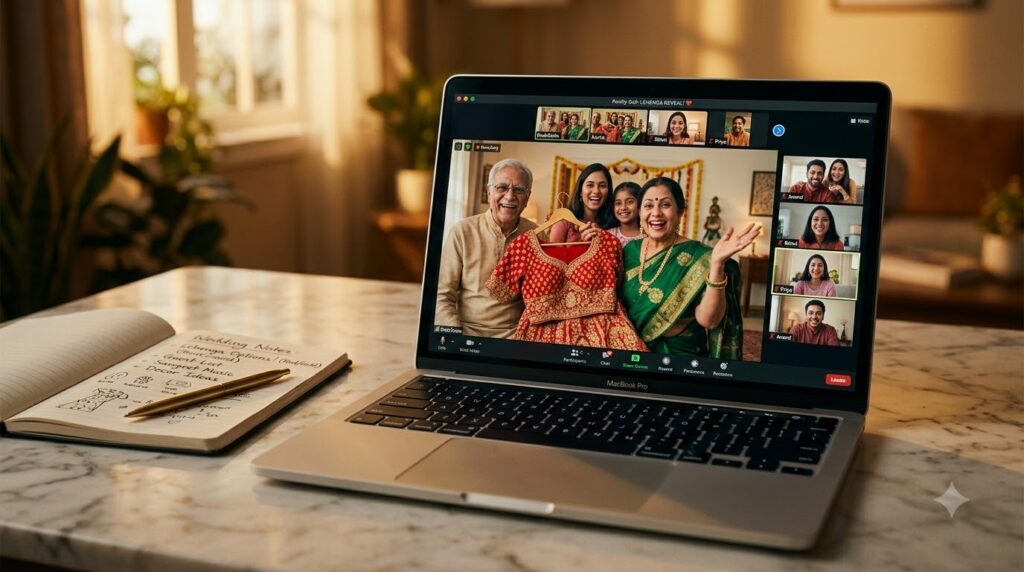
Keeping two separate spreadsheets is how numbers drift. Track both groups in a single guest list with a “location” field, so you can filter for overseas guests when you need to send visa reminders and filter for India-based guests when you need a catering count. A shared digital guest list also means both families can see the same live numbers without a chain of forwarded WhatsApp messages.
| Consideration | India-based guests | Overseas guests |
|---|---|---|
| Save-the-date | Optional | Essential, 8–10 months out |
| Invitation lead time | 4–6 weeks | 4–5 months |
| Typical RSVP method | WhatsApp or via family | Written confirmation needed |
| Headcount reliability | Fluid — build a buffer | Firm once flights are booked |
| Extra information needed | Venue and timings | Visa, accommodation, dress code, itinerary |
When to Send: The NRI Invitation Timeline
GETTING THE CARD ACROSS BORDERS
Invitations are where NRI wedding planning diverges most sharply from planning a wedding at home. Printed cards are beautiful, and for many families they are non-negotiable — the physical card handed to elders carries real meaning. The problem is purely logistical: couriering cards from India to guests in the US, UK, Canada, or Australia is slow, expensive, and unreliable. Cards arrive damaged, arrive late, or arrive after the guest has already booked a flight for the wedding you told them about over the phone.
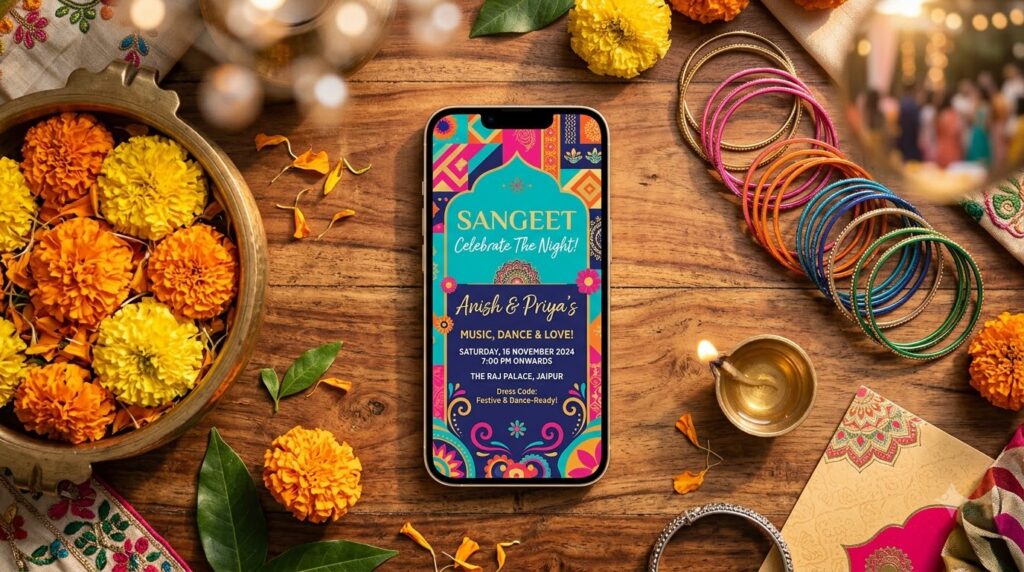
The approach that works for most NRI couples is a split one: print a smaller batch for the families and elders who expect a card in hand, and send everyone else a digital invitation. You keep the tradition where it matters and remove the international shipping problem entirely. If you are weighing the two, our breakdown of physical invites versus digital wedding websites compares the real costs side by side.
The three sends
- Save-the-date (8–10 months out): Date, city, and a note that full details will follow. Nothing else. This exists purely to get flights booked.
- Formal invitation (4–5 months out for overseas guests): Full function schedule, venue addresses, dress codes, accommodation links, and the RSVP request.
- Final details (2–3 weeks out): Arrival logistics, transport, contact numbers, and any last-minute changes.
Why WhatsApp is the default channel for NRI weddings
WhatsApp crosses borders at no cost, reaches nearly every Indian household, and is already how most families coordinate. A digital invitation shared as a single link works in every country your guests live in, opens on any phone, and can be forwarded through family groups without anything being lost. Our guide to WhatsApp wedding invitations in India covers the etiquette in more detail.
Pro tip: Include a short explanation of each ceremony in your invitation for guests who have not attended an Indian wedding before. A one-line note on what happens at the mehndi ceremony saves a dozen individual questions later.
Collecting RSVPs Across Time Zones
THE HARDEST HEADCOUNT IN WEDDING PLANNING
RSVPs are the part of NRI wedding planning that catches couples out most often. You are collecting confirmations from two countries, across a 10–13 hour gap, from guests who cannot simply be phoned, for a caterer who needs a number six weeks out and a hotel that needs a room block confirmed even earlier.
Traditional RSVP methods fail here for specific reasons:
- Reply cards require international return postage and take weeks each way.
- Phone calls mean chasing dozens of guests inside a narrow overlap window, at your own expense.
- WhatsApp messages get replies, but scattered across a dozen chats with no running count — and confirmations from relatives on behalf of other relatives that nobody can verify.
What actually works
- One link, one form. Every guest responds through the same invitation link, no matter which country they are in, and every response lands in the same list.
- Live tracking. You should be able to open your phone at any hour and see your current confirmed count without asking anyone.
- Per-function RSVPs. Overseas guests may attend all four days while local colleagues come only to the reception. Collecting a single yes/no gives you a useless number for catering.
- Group responses. One person should be able to confirm for their whole household — this is how Indian families actually reply.
- A visible deadline and automated reminders, so chasing non-responders is not a manual job you do at 6am.
This is exactly the problem digital invitations solve, and it is worth reading our guide to digital wedding invitations with built-in RSVP tracking before you commit to a method — changing your RSVP system after invitations have gone out is close to impossible.
Visas, OCI Cards, and Guest Documents
PAPERWORK THAT CANNOT BE RUSHED
This is the part of NRI wedding planning your overseas guests will thank you for. Send it with the formal invitation, not after.
Who needs what
- Indian passport holders: No visa required. They travel on their Indian passport.
- OCI cardholders: An Overseas Citizen of India card functions as a lifelong, multiple-entry visa. Holders travel on their foreign passport carrying the OCI card and need no additional visa.
- Foreign passport holders without OCI: A standard tourist e-visa is sufficient to attend a wedding — there is no wedding-specific visa category. E-visas typically process within days, but processing times shift, and a guest applying two weeks before departure is taking an avoidable risk.
The NRI Information guide to Indian visas and OCI is a useful reference to share directly with guests.
Two things to check early
- Passport validity. Most guests need at least six months of validity remaining beyond their travel date. Renewals abroad can take weeks.
- OCI re-issue rules. Cardholders who have renewed their passport may need their OCI re-issued or re-linked before travelling. This is a common and entirely avoidable problem discovered at the airport.
Marriage Registration for NRI Couples
THE LEGAL LAYER
The step most NRI wedding planning guides leave out entirely: a religious ceremony alone does not produce a legally recognised marriage certificate. If you will need one — for a spouse visa, immigration sponsorship, joint property, or name changes abroad — you need to plan the registration alongside the wedding, not after it.
Three statutes typically apply:
- Hindu Marriage Act, 1955 — for Hindu, Sikh, Jain, and Buddhist couples married through religious rites. Registration follows the ceremony and is comparatively fast.
- Special Marriage Act, 1954 — for interfaith and intercaste marriages, and where one party is a foreign national. This is a civil registration and carries a 30-day public notice period that cannot be waived or compressed, including for NRIs.
- Foreign Marriage Act, 1969 — where the marriage is solemnised at an Indian embassy or consulate abroad.
Pro tip: If you need a certificate under the Special Marriage Act, work backwards from the 30-day notice period and allow 45–60 days in total. Collect any documents needing apostille or attestation at least 60 days ahead — this step routinely takes longer than couples expect.
Certificates intended for use abroad usually need to be apostilled. Confirm the requirement with the relevant consulate before you leave India, because obtaining an apostille after you have flown home is significantly harder.
What an NRI Wedding Actually Costs
BUDGETING IN TWO CURRENCIES
NRI wedding planning carries costs that a local wedding budget never accounts for: international flights for the couple and immediate family, at least one pre-wedding planning trip, accommodation for overseas guests, currency conversion losses, and international transfer fees on vendor payments.
The most useful discipline is to track every line item in both INR and your home currency. A budget set at an exchange rate twelve months out can drift meaningfully by the wedding date, and it usually drifts in the direction you did not plan for.
| Cost | When it hits | How to control it |
|---|---|---|
| Planning trip to India | 4–6 months out | One well-sequenced trip instead of two rushed ones |
| Couple and family flights | 8–10 months out | Book with the save-the-date, not after |
| Currency conversion | Throughout | Budget in both currencies; agree the rate with vendors in writing |
| International transfer fees | Each vendor payment | Fewer, larger tranches rather than many small transfers |
| Guest accommodation | 3–6 months out | Negotiate a hotel block early; share the link with invitations |
| Courier of printed cards abroad | 4–5 months out | Print a small batch locally; send the rest digitally |
Invitations are one of the easiest places to recover budget without anyone noticing a compromise — couples planning a wedding under 10 lakhs routinely cut invitation costs by 60–70% by going digital, and for an NRI wedding you also delete the international courier bill entirely.
Planning Your NRI Wedding with MyShaadhi Link
BUILT FOR WEDDINGS THAT CROSS BORDERS
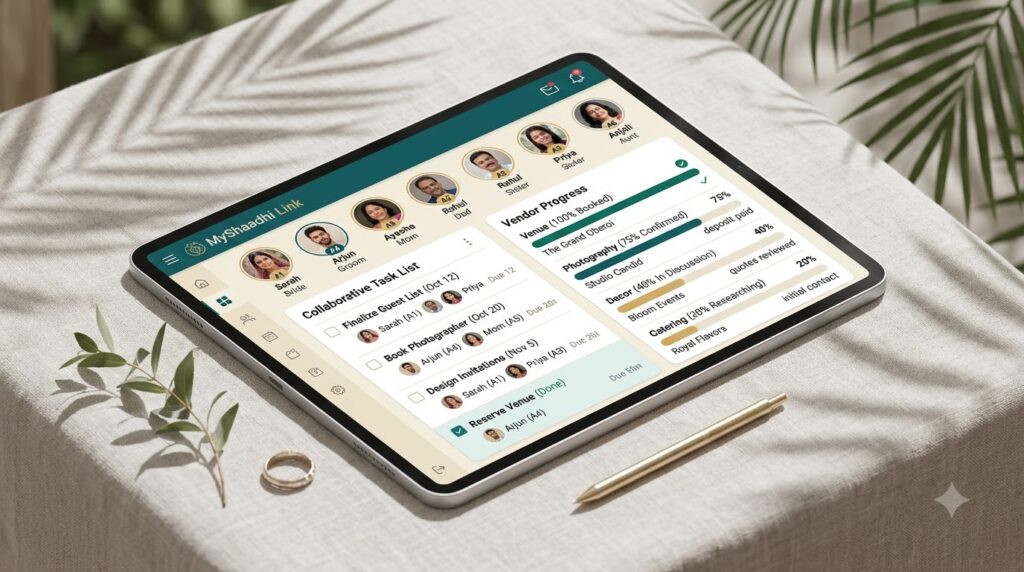
The parts of NRI wedding planning that cause the most stress — getting the invitation to guests in six countries, collecting reliable RSVPs across time zones, and keeping both families looking at the same numbers — are exactly what MyShaadhi Link is built for.
- One link, every country. Share your invitation over WhatsApp and it opens on any phone, anywhere, with no app to install and no postage.
- Live RSVP tracking. See your confirmed headcount update in real time, with per-function responses so your catering numbers are actually usable.
- Guest management in one place. Keep India-based and overseas guests on a single list that both families can see.
- Full event schedule. Give guests the complete function-by-function itinerary with venue maps — essential for anyone flying in.
- Multilingual invitations. Reach relatives who are more comfortable reading in their own language.
- Countdown and gallery. Keep guests spread across continents connected to the celebration in the months before it.
Browse the full range of invitation templates or see pricing to get started. Your wedding may be spread across two continents — your guest list does not have to be.
Frequently Asked Questions
How far in advance should NRIs start planning an Indian wedding?
Start 12 months ahead. NRI wedding planning needs more lead time than a local wedding because overseas guests must book international flights and, in some cases, apply for visas. The absolute minimum is 8 months, but at that point venue choice in peak season becomes limited and guest attendance drops.
How many trips to India do I need before the wedding?
Most NRI wedding planning schedules include one pre-wedding trip of 7–14 days, usually 4–6 months before the wedding, plus arriving 7–10 days early for the wedding week itself. One well-planned trip covering the venue walkthrough, caterer tasting, outfit fittings, and vendor meetings is generally enough if you have a planner or family member on the ground.
When should I send wedding invitations to guests living abroad?
Send a save-the-date 8–10 months before the wedding and the formal invitation 4–5 months out. Overseas guests need this lead time for affordable flights, leave approval, and any visa paperwork. India-based guests can be invited 4–6 weeks out, in line with local custom.
Do wedding guests need a visa to attend a wedding in India?
It depends on their documents. Indian passport holders need nothing. OCI cardholders travel on their foreign passport with the OCI card, which acts as a lifelong multiple-entry visa. Guests holding a foreign passport without OCI need a standard tourist e-visa — there is no wedding-specific visa category. Tell guests at least four months ahead so nobody is applying at the last minute.
How do I collect RSVPs from guests in different countries?
Use a single digital invitation link with built-in RSVP so every guest responds through the same form regardless of location, and you see one live headcount. Reply cards do not work internationally, and WhatsApp replies scattered across chats leave you without a reliable count. Set a hard deadline six weeks before the wedding and allow one guest to respond for their whole household.
Should I send printed or digital wedding invitations as an NRI?
Most NRI couples do both: a small printed batch for elders and close family who expect a physical card, and digital invitations for everyone else. Couriering cards internationally is expensive and unreliable, and cards frequently arrive after guests have already needed to book flights.
Is a religious ceremony in India legally recognised abroad?
Not on its own. You need a registered marriage certificate for spouse visas, immigration sponsorship, or name changes abroad. Registration falls under the Hindu Marriage Act 1955, the Special Marriage Act 1954 for interfaith marriages and those involving a foreign national, or the Foreign Marriage Act 1969 for embassy ceremonies. Certificates for use abroad usually need to be apostilled.
How long does marriage registration take for NRI couples in India?
Under the Hindu Marriage Act, registration after the ceremony is relatively quick. The Special Marriage Act requires a 30-day public notice period that cannot be waived or shortened for NRIs, so allow 45–60 days in total and collect any apostilled documents at least 60 days in advance.
How do I pay Indian vendors from abroad?
Most established vendors and planners accept international wire transfers. Use fewer, larger payment tranches rather than many small transfers to limit fees, and agree the applicable exchange rate in writing so the final invoice does not surprise you. Track every payment in both INR and your home currency.
What is a two-country wedding and does it make sense?
A two-country wedding pairs a ceremony in India with a reception in the country where you live, so friends and colleagues who cannot travel can still celebrate with you. It works well when a significant part of your social circle is based abroad. Plan the India events first, then slot the overseas reception in once those dates are locked.
 Tamil Weddings
Kovil Pathirikai: 7 Sacred Tips for a Beautiful Tamil Wedding
Key Takeaway: A kovil pathirikai wedding invitation is more than stationery; it is a sacred announcement that carries centuries of […]
Read article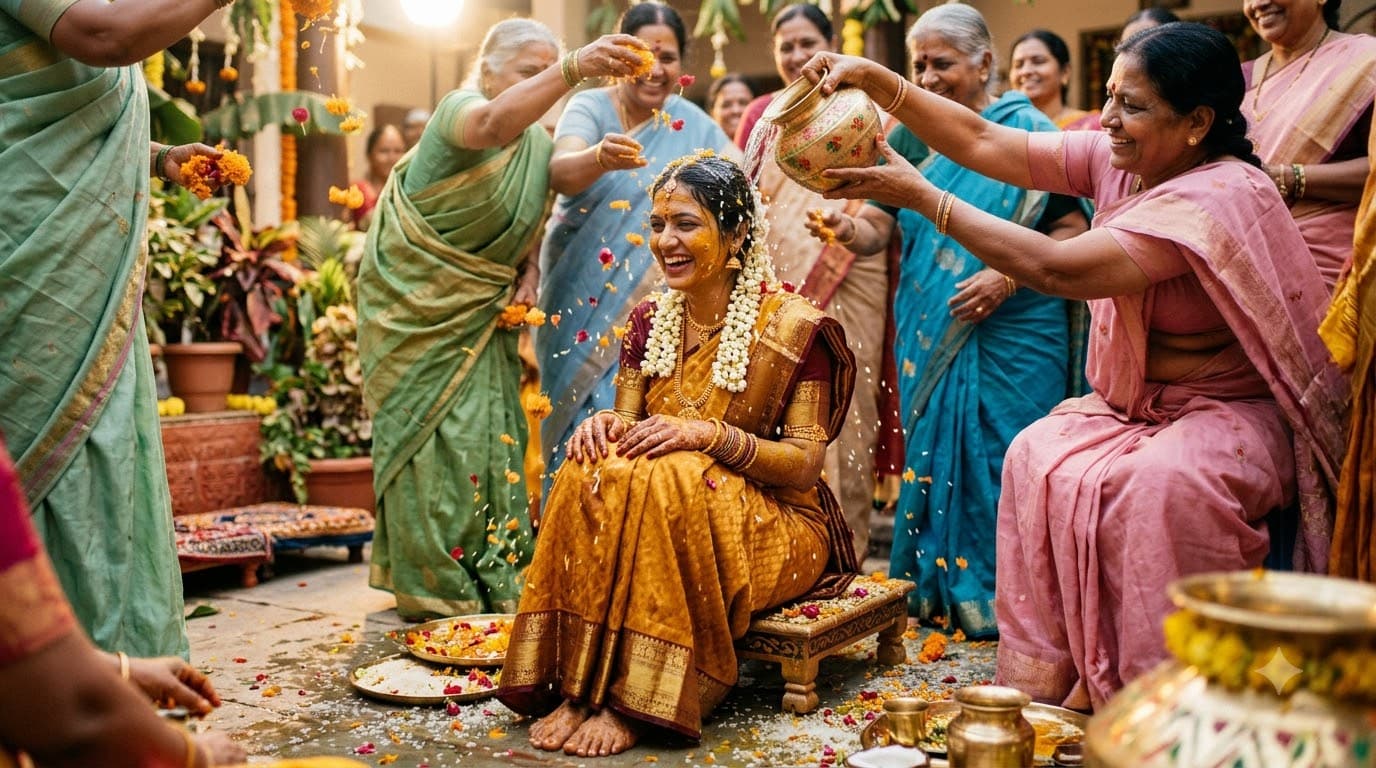 telugu-weddings
Pellikuthuru: 7 Sacred Rituals for a Beautiful Telugu Bride
Pellikuthuru is the sacred Telugu ritual where the bride is bathed in turmeric, anointed, and blessed by family before her wedding. Here’s the complete guide to its meaning, rituals, and planning.
Read article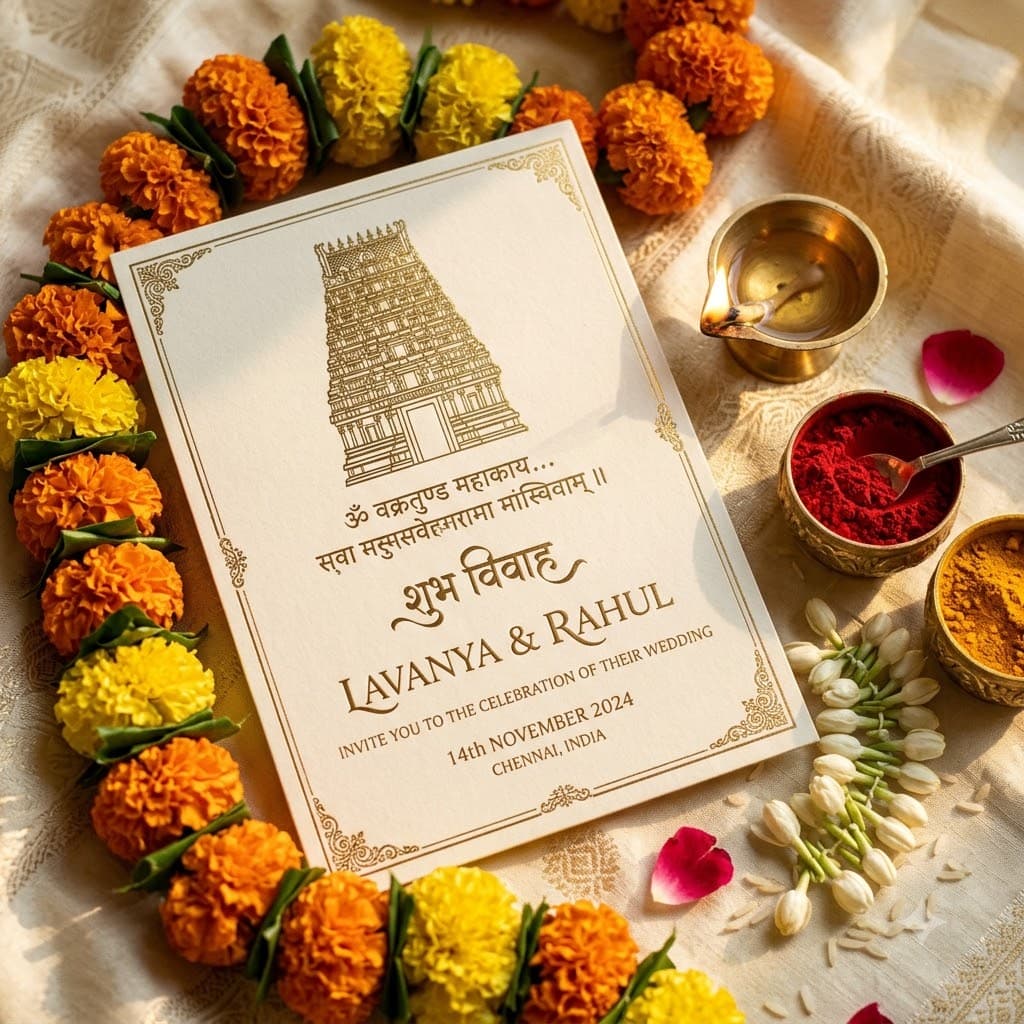 Invitation Ideas
Temple Wedding Invitation Wording: Best Guide (2026)
Key Takeaway: A temple wedding invitation is far more than a card announcing a date and venue. It is the […]
Read articleReady to create your wedding invitation?
Explore our handcrafted templates — designed for South Indian, Christian, and modern weddings. Share via WhatsApp in minutes.
Browse Templates