50+ Beautiful Wedding Invitation Wording Ideas for Every Style
Get 50+ wedding invitation wording examples — traditional, modern, bilingual, digital, and for every hosting situation — plus RSVP etiquette and mistakes to avoid.

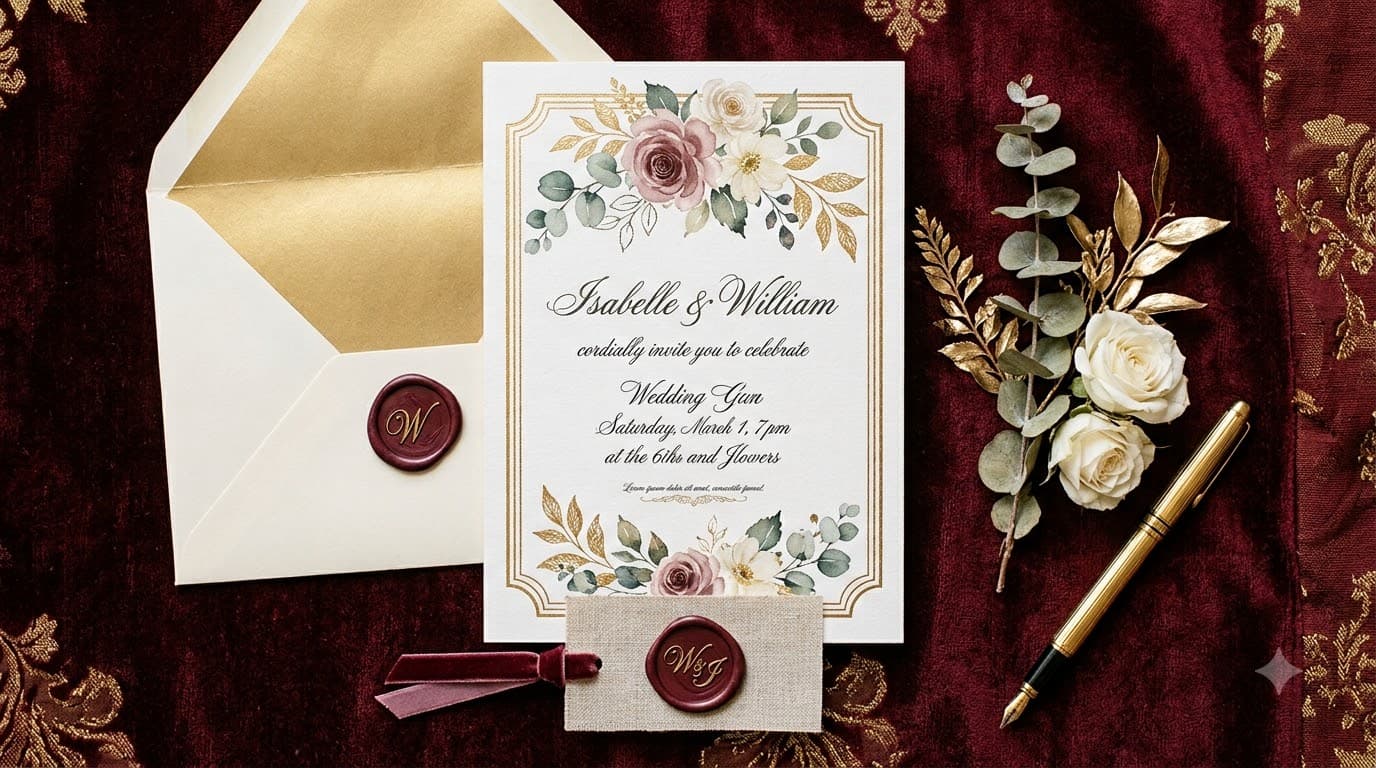
Key Takeaway: Wedding invitation wording sets the tone for your entire celebration before guests even arrive. Whether you want traditional, formal wording or a modern, casual tone, the right words communicate who’s hosting, what to expect, and how to respond, while reflecting your relationship and cultural background. This guide gives you 50+ ready-to-use wording examples for every hosting situation, tradition, and invitation style.
Table of Contents
- Why Wedding Invitation Wording Matters
- Essential Elements of Every Invitation
- Traditional and Formal Wording
- Modern and Casual Wording
- Wording When Parents Are Hosting
- Wording When the Couple Hosts
- Wording for Divorced or Blended Families
- Bilingual and Regional Wording
- Reception-Only and Multi-Event Wording
- Wording for Digital Invitations
- RSVP Wording and Etiquette
- Common Wording Mistakes to Avoid
- Frequently Asked Questions
GETTING STARTED
Why Wedding Invitation Wording Matters
Your invitation is the very first impression guests get of your wedding, arriving weeks or months before they see a single flower or hear a single song. Good wedding invitation wording does more than announce a date and address — it tells guests how formal to dress, who is hosting, what kind of celebration to expect, and how much they matter to you. Getting it right, whether on a printed card or a digital wedding invitation from MyShaadhi Link, removes confusion and sets the emotional tone for everything that follows.
Couples often underestimate how many decisions live inside a few lines of text: whose names come first, how to credit hosts without excluding anyone, whether to write out “half after six” or simply “6:30 PM,” and how to signal a black-tie affair without saying “formal attire required” in bold letters. The right wedding invitation wording navigates all of this gracefully.
This guide walks through wording for every situation — traditional, modern, parent-hosted, self-hosted, blended families, bilingual ceremonies, and digital invites — so you can adapt examples rather than start from a blank page.
THE BUILDING BLOCKS
Essential Elements of Every Invitation
Nearly every piece of wedding invitation wording, regardless of style or tradition, is built from the same core components. Understanding these building blocks makes it much easier to mix, match, and personalize any template.
| Element | Purpose | Example |
|---|---|---|
| Host line | States who is hosting and paying for the wedding | “Together with their families” |
| Request line | Formally invites the guest to attend | “request the pleasure of your company” |
| Couple’s names | Identifies who is getting married | “Ananya Rao and Rohan Mehta” |
| Event line | Names the occasion | “at the celebration of their marriage” |
| Date and time | Tells guests when to arrive | “Saturday, the fourteenth of March, at half after five” |
| Venue line | Gives the location | “The Grand Ballroom, Hyderabad” |
| Reception/RSVP line | Details on the reception or how to respond | “Reception to follow” / “Kindly respond by…” |
Not every invitation needs all seven elements spelled out in full — modern and digital invitations often compress several lines into a friendlier, shorter format. But knowing what each line is doing helps you decide what to keep, cut, or reword for your own wedding invitation wording.
CLASSIC ELEGANCE
Traditional and Formal Wording
Traditional, formal wedding invitation wording favors full names, spelled-out numbers, and third-person phrasing. It’s the standard choice for religious ceremonies, larger weddings, and families who want a timeless, respectful tone.
Classic Hindu wedding wording
Mr. and Mrs. Suresh Rao
request the pleasure of your company
at the marriage of their daughter
Ananya
with
Rohan
son of Mr. and Mrs. Anil Mehta
Saturday, the fourteenth of March
two thousand twenty-six
at half after five in the evening
The Grand Ballroom, Hyderabad
Classic Christian wedding wording
Together with their families
Sarah Thomas
and
Daniel George
request the honour of your presence
at their marriage
Saturday, the tenth of October
at four o’clock in the afternoon
St. Mary’s Church, Bangalore
Reception to follow at The Oakwood
Classic Sikh wedding wording
With the blessings of Waheguru
Mr. and Mrs. Harpreet Singh
request your gracious presence
at the Anand Karaj of their daughter
Simran
with
Arjun
son of Mr. and Mrs. Manjit Kaur
Sunday, the fifth of April
at nine o’clock in the morning
Gurudwara Sahib, Amritsar
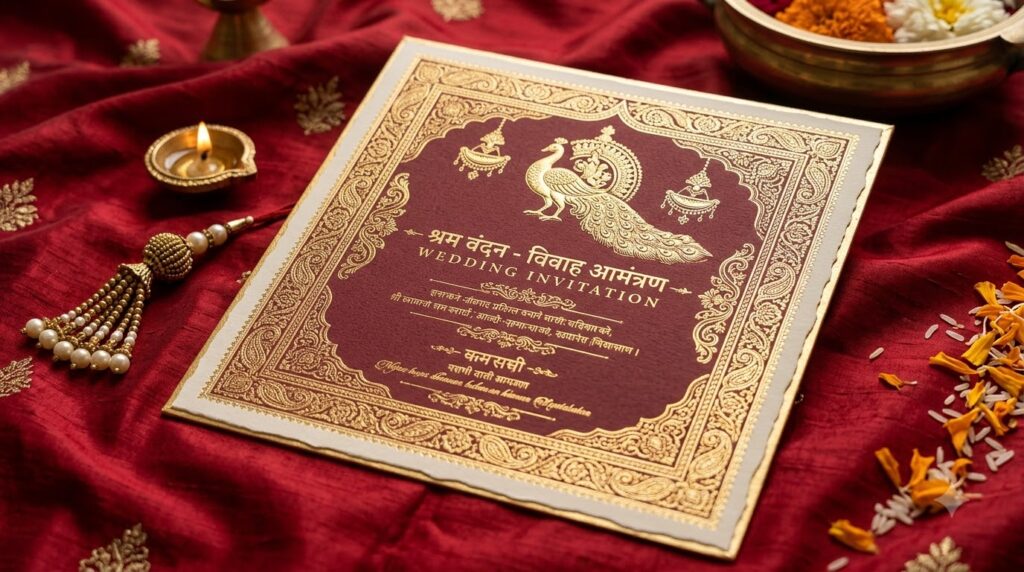
Notice how each example follows the same skeleton — host line, request line, names, date and time, venue — but swaps in tradition-specific words like “Anand Karaj” or “the honour of your presence.” When adapting traditional wedding invitation wording, keep this structure and simply substitute the cultural or religious terms that apply to your ceremony.
RELAXED AND PERSONAL
Modern and Casual Wording
Modern wedding invitation wording drops the formal third-person voice in favor of warmer, more conversational language. It works well for intimate weddings, second marriages, destination weddings, and couples who simply want their invitation to sound like them.
Playful and casual
We’re getting married!
Priya & Karthik
are tying the knot and would love for you to be there.
Saturday, March 14, 2026 · 5:30 PM
The Grand Ballroom, Hyderabad
Dinner and dancing to follow — come hungry!
Warm and heartfelt
Two families, one love story.
Please join us as we begin our forever.
Meera and Aditya
Saturday, the fourteenth of March
Half past five in the evening
The Grand Ballroom, Hyderabad
Modern wedding invitation wording still needs every practical detail — date, time, venue, RSVP — but it delivers that information with personality. Many couples now pair a casual tone with a formal typeface, giving guests a friendly read without sacrificing an elegant look.
GIVING CREDIT WHERE DUE
Wording When Parents Are Hosting
When parents are paying for or organizing the wedding, tradition holds that their names appear as the hosts. How you phrase this depends on whether one or both families are hosting together.
Bride’s parents hosting
Mr. and Mrs. Suresh Rao
request the pleasure of your company
at the marriage of their daughter
Ananya Rao
to
Rohan Mehta
Both families hosting together
Together with their families
Mr. and Mrs. Suresh Rao and Mr. and Mrs. Anil Mehta
request the pleasure of your company
at the marriage of their children
Ananya and Rohan
When both sets of parents are contributing, listing the bride’s parents first is the traditional convention, though many modern families now simply alphabetize or choose whichever order reads better. There’s no longer a strict rule — just consistency and mutual agreement between both families matters most.
INDEPENDENT CELEBRATIONS
Wording When the Couple Hosts
An increasing number of couples pay for their own weddings, especially when marrying later or hosting a smaller, independent celebration. Self-hosted wedding invitation wording drops the parent host line entirely and puts the couple’s names first.
Ananya Rao
and
Rohan Mehta
together with their families
invite you to celebrate their marriage
Saturday, the fourteenth of March
at half after five in the evening
The Grand Ballroom, Hyderabad
Adding “together with their families” acknowledges parental involvement and blessing without implying they footed the bill — a small phrase that keeps the tone inclusive even when the couple is the official host.
HANDLED WITH CARE
Wording for Divorced or Blended Families
Wedding invitation wording for divorced or blended families requires extra care to acknowledge every parent respectfully, without implying an awkward joint household that no longer exists. There’s no single “correct” format — the right choice depends on each family’s relationships.
Divorced parents, both listed (cordial relationship)
Mrs. Kavita Rao
and
Mr. Suresh Rao
request the pleasure of your company
at the marriage of their daughter
Ananya
to
Rohan Mehta
One parent hosting, other parent acknowledged
Mrs. Kavita Rao
requests the pleasure of your company
at the marriage of her daughter
Ananya, daughter of Kavita and Suresh Rao,
to
Rohan Mehta
Remarried parent with stepparent
Mr. and Mrs. Suresh Rao and Meena Iyer
request the pleasure of your company
at the marriage of
Ananya Rao
to
Rohan Mehta
When in doubt, put the parent-child relationship first (“Ananya, daughter of…”) rather than trying to fit every remarriage into a single host line — it reads more naturally and avoids awkward listing order debates.
HONORING HERITAGE
Bilingual and Regional Wording
Many South Asian weddings bring together guests who read English, Hindi, Telugu, Tamil, Punjabi, or another regional language more comfortably. Bilingual wedding invitation wording ensures every generation of guest feels equally welcomed.
Common auspicious openings by language
| Language/Tradition | Common Opening Line | Meaning |
|---|---|---|
| Sanskrit/Hindu | Shubh Vivah | Auspicious marriage |
| Telugu | Subhalekha | Auspicious invitation/letter |
| Tamil | Thirumana Azhaippidhazh | Wedding invitation |
| Punjabi/Sikh | Waheguru Ji Ka Khalsa | Invocation of blessing before the Anand Karaj |
| Urdu/Muslim | Bismillah ir-Rahman ir-Rahim | In the name of God, the Merciful |
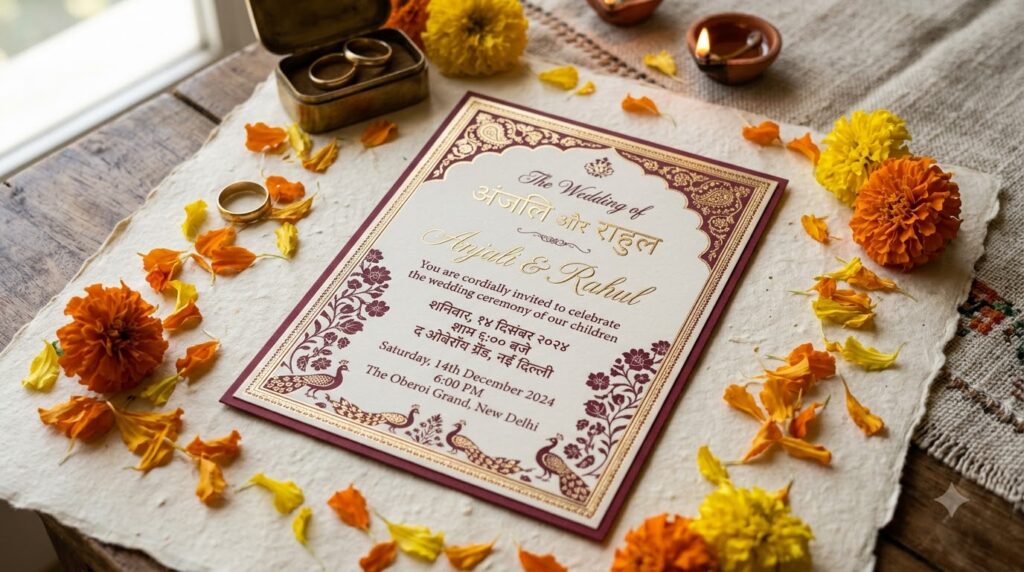
For fully bilingual cards or digital invites, a common approach is to print the regional-language invocation and key names at the top, then repeat the full wedding invitation wording in English below — or place them side by side on a landscape layout. This keeps the ceremony’s cultural authenticity intact while making practical details accessible to every guest.
MULTIPLE CELEBRATIONS
Reception-Only and Multi-Event Wording
Indian weddings rarely involve just one event — mehndi, sangeet, haldi, the wedding ceremony, and the reception often each need their own invitation wording or a combined multi-event card.
Reception-only invitation (after a private ceremony)
Ananya & Rohan
were married in a private ceremony
and joyfully invite you to celebrate with them
at their wedding reception
Saturday, the fourteenth of March
at seven o’clock in the evening
The Grand Ballroom, Hyderabad
Multi-event wedding itinerary card
| Event | Date | Time |
|---|---|---|
| Mehndi Ceremony | Thursday, March 12 | 6:00 PM |
| Sangeet Night | Friday, March 13 | 7:00 PM |
| Wedding Ceremony | Saturday, March 14 | 10:00 AM |
| Reception | Saturday, March 14 | 7:00 PM |
When multiple events are involved, a single clear itinerary card or digital timeline (rather than cramming every detail into one paragraph) keeps wedding invitation wording readable and helps guests plan travel and outfits accordingly.
SCREEN-FRIENDLY WORDING
Wording for Digital Invitations
Digital wedding invitation wording works a little differently than print. Guests often read it on a phone screen inside WhatsApp or email, so shorter lines, clear hierarchy, and scannable formatting matter more than ornate, uninterrupted paragraphs.
- Lead with the couple’s names in large text — this is what recognition happens on first glance
- Break date, time, and venue into separate lines rather than one dense sentence, so key facts are easy to scan
- Keep the invocation or blessing line short if bilingual, since long text blocks scroll poorly on mobile
- Add a tappable RSVP button or link instead of “kindly respond by mail,” since MyShaadhi Link’s digital invitations let guests confirm attendance in one tap
- Include a live map link under the venue line, saving guests a separate search
Ananya & Rohan
are getting married!
Saturday, March 14, 2026
5:30 PM onwards
The Grand Ballroom, Hyderabad
Tap below to RSVP and view all wedding events
Because digital invitations can hold layered information — a full itinerary, a photo gallery, a live countdown — you don’t need to compress everything into the opening screen the way a printed card demands. Save the formal wedding invitation wording for the headline, and let secondary screens carry the schedule, dress code, and travel details.
MAKING IT EASY TO ANSWER
RSVP Wording and Etiquette
Clear RSVP wording prevents the single most common wedding-planning headache: guests who never respond. According to etiquette guidance from the Emily Post Institute, an RSVP request should always include a clear deadline and an easy way to respond.
| Style | Wording |
|---|---|
| Formal | “Kindly respond on or before the first of February” |
| Modern | “Please RSVP by February 1” |
| Digital | “Tap to RSVP — we can’t wait to celebrate with you!” |
| With meal choice | “Kindly indicate your meal preference when you RSVP by February 1” |
| Plus-one clarity | “We have reserved ___ seat(s) in your honor” |
Avoid vague RSVP wording like “Regrets only” unless you’re prepared for silence to mean acceptance — it works for very small, close-knit guest lists but creates uncertainty for larger weddings. Setting the RSVP deadline 3-4 weeks before the wedding gives you enough buffer for final headcounts with caterers and venues.
AVOID THESE PITFALLS
Common Wording Mistakes to Avoid
- Inconsistent formality: Mixing “6:30 PM” with spelled-out “half after five” within the same card reads as unpolished — pick one register and stay consistent
- Omitting the year: Formal invitations traditionally spell out the full date including the year; digital invites can skip it if the year is implied by context
- Vague venue details: “At the family farmhouse” without an address or map link leaves out-of-town guests stranded — always include enough detail for GPS navigation
- Forgetting dress code: If you want guests in traditional attire or black-tie, say so directly rather than assuming they’ll infer it from the venue
- No plus-one clarity: Addressing an envelope or digital invite ambiguously leads to unwanted extra guests — always specify names or “and guest” explicitly
- Overcrowded first screen (digital): Cramming the full multi-event schedule into the opening message overwhelms readers — layer information across screens instead
Most wedding invitation wording mistakes come down to assuming guests know more than they do. When in doubt, over-communicate the practical details — the poetic language can stay elegant, but the who, what, when, and where should always be unmistakably clear.
Craft Your Perfect Invitation with MyShaadhi Link
Whether you want traditional wedding invitation wording, a modern bilingual layout, or a multi-event digital itinerary your guests can RSVP to in one tap, MyShaadhi Link gives you customizable templates built for South Asian weddings. Design it once, share it everywhere, and track every RSVP in real time.
COMMON QUESTIONS
Frequently Asked Questions
What is the best wedding invitation wording for a first-time reader?
The most reliable wedding invitation wording follows the classic order: who’s hosting, the couple’s names, the event, the date and time, the venue, and the RSVP instructions. This structure works whether you choose a formal, modern, or bilingual tone, because it answers every practical question a guest has in a logical sequence.
Whose name goes first on a wedding invitation?
Traditionally the bride’s name is listed first, followed by the groom’s. Same-sex couples and modern weddings increasingly choose alphabetical order, whoever’s family is hosting, or simply whichever order sounds better when read aloud — there’s no longer a strict rule.
How do I word an invitation when parents are divorced?
List both parents’ names separately without implying they are still married (e.g., “Mrs. Kavita Rao and Mr. Suresh Rao”), or phrase it as “Ananya, daughter of Kavita and Suresh Rao” if listing both as hosts feels awkward. Choose whichever format both parents are comfortable with.
Should digital wedding invitation wording be shorter than print?
Yes. Digital invitations are read on small screens, so lead with the couple’s names and core details (date, time, venue) up front, then move detailed itineraries, dress codes, and travel information to secondary screens or linked pages rather than one long block of text.
How do I indicate a dress code in wedding invitation wording?
State it plainly in a dedicated line, such as “Traditional attire requested” or “Black tie optional.” Avoid relying on guests to infer formality from the venue name alone — an explicit dress code line prevents awkward mismatches on the day.
What’s the best RSVP wording to get responses on time?
Include a specific deadline (3-4 weeks before the wedding) and the easiest possible response method — a tappable digital RSVP link gets the highest response rate, followed by a dedicated RSVP card with a stamped envelope. Avoid “regrets only” wording for larger guest lists, since silence becomes ambiguous.
 Tamil Weddings
Kovil Pathirikai: 7 Sacred Tips for a Beautiful Tamil Wedding
Key Takeaway: A kovil pathirikai wedding invitation is more than stationery; it is a sacred announcement that carries centuries of […]
Read article telugu-weddings
Pellikuthuru: 7 Sacred Rituals for a Beautiful Telugu Bride
Pellikuthuru is the sacred Telugu ritual where the bride is bathed in turmeric, anointed, and blessed by family before her wedding. Here’s the complete guide to its meaning, rituals, and planning.
Read article Invitation Ideas
Temple Wedding Invitation Wording: Best Guide (2026)
Key Takeaway: A temple wedding invitation is far more than a card announcing a date and venue. It is the […]
Read articleReady to create your wedding invitation?
Explore our handcrafted templates — designed for South Indian, Christian, and modern weddings. Share via WhatsApp in minutes.
Browse Templates