South Indian Wedding Cards UK: 7 Digital Invite Ideas for 2026
ID:4984 Key Takeaway: South Indian wedding cards in the UK bridge two worlds, honouring Telugu and Tamil traditions while solving […]

Key Takeaway: South Indian wedding cards in the UK bridge two worlds, honouring Telugu and Tamil traditions while solving the logistical challenges of diaspora families. Digital invitations preserve cultural authenticity, reduce costs by up to 80%, and offer real-time guest management that transforms planning stress into joyful anticipation.
Table of Contents
- Why South Indian Wedding Cards Matter
- Digital Invites vs Traditional Wedding Cards
- Cultural Elements in Telugu Tamil Invitations
- MyShaadhi Link: Your Digital Shaadi Solution
- Designing Your Perfect Wedding E-Invite
- RSVP Tracking and Guest Management Made Easy
- Real UK Families Share Their Digital Invite Stories
CULTURAL FOUNDATIONS
Why South Indian Wedding Cards Matter
Cultural significance in Telugu Tamil traditions
Wedding invitations in Telugu and Tamil communities carry profound spiritual weight. They are not simply announcements but sacred documents that invoke blessings and mark the formal beginning of two families uniting. The invitation itself becomes a vessel for tradition, carrying forward centuries of customs that honour ancestors, deities, and the auspicious timing chosen by family elders.
For families in the UK maintaining connections to ancestral roots, south indian wedding cards uk serve as tangible expressions of cultural identity. The card often opens with a Ganapati invocation or a Sanskrit shloka, setting a devotional tone that resonates deeply with older generations. These elements remind everyone, from Birmingham to Bangalore, that this celebration transcends geography and remains rooted in shared heritage.
The design language of South Indian wedding stationery speaks volumes. Gold foil accents symbolize prosperity, while lotus motifs represent purity and divine blessings. Red and gold colour palettes echo the sacred hues of kumkum and turmeric used in wedding rituals. Every visual choice carries meaning, transforming a simple card into a cultural artifact that guests treasure long after the celebration ends.
The diaspora challenge: distance and timing
British South Asian families face unique coordination hurdles that their India-based relatives rarely encounter. Guest lists span continents, with elderly relatives in Chennai or Hyderabad, cousins across the UK, and friends scattered throughout Europe. Traditional printed cards require weeks for international shipping, often arriving too late for guests to arrange travel or request time off work.
Time zone differences complicate communication further. When families in Leicester finalize venue details at 7 PM, it is already past midnight in Andhra Pradesh. Phone calls become difficult to schedule, and postal delays add frustration. South Asian families in the UK increasingly turn to e-invitations to manage multi-location weddings without losing cultural authenticity, recognizing that digital solutions respect both tradition and modern realities.
The emotional toll of distance weighs heavily on planners. Couples want their grandparents to feel included from the first moment, yet worry about whether printed cards will reach them in time. They balance respect for elders who cherish physical invitations with the practical need to confirm attendance quickly. This tension between tradition and logistics defines the diaspora wedding planning experience.
First impression for guests across continents
Your invitation sets the tone for the entire celebration. Guests form expectations about formality, cultural emphasis, and attention to detail based on what arrives in their inbox or mailbox. A beautifully crafted card signals that this will be a thoughtfully planned event where tradition and hospitality take center stage.
For younger guests born and raised in the UK, the invitation may be their first deep encounter with Telugu or Tamil wedding customs. A well-designed card becomes an educational tool, introducing them to the significance of muhurtham timings, the sequence of ceremonies, and the cultural context that makes each ritual meaningful. This gentle introduction helps everyone feel prepared and respectful.
International guests especially appreciate clear, comprehensive information. They need venue addresses formatted for UK postal codes, parking details, dress code guidance, and perhaps most importantly, a sense of the schedule so they can plan travel. The invitation becomes their roadmap, and its clarity directly impacts their comfort and enthusiasm about attending.
MODERN SOLUTIONS
Traditional vs Digital Wedding Invitation Methods
| Aspect | Traditional Cards | Digital Invites | Best For |
|---|---|---|---|
| Delivery Time | 2-4 weeks via post | Instant (seconds) | Last-minute UK weddings |
| Cost Per Invite | GBP 2-5 per card | GBP 0.10-0.50 | Budget-conscious families |
| RSVP Tracking | Manual phone calls/emails | Automated dashboard | Managing 200+ guests |
| Cultural Design | Limited customization | Full Telugu/Tamil elements | Authentic cultural expression |
| International Reach | Limited to UK/nearby | Worldwide accessibility | Relatives in India/abroad |
| Environmental Impact | Paper waste | Zero waste | Eco-conscious couples |
Digital Invites vs Traditional Wedding Cards
Cost and environmental benefits
UK couples spend an average of £378 on printed wedding stationery, with invitations alone starting at £1.50 each and bespoke suites reaching £600–£1,500 (Bridebook, 2026). A digital invitation removes the per-card and postage cost entirely, and reaches guests in India the moment you share the link. For families hosting elaborate multi-day celebrations, these savings allow budgets to stretch toward catering, decor, or accommodations. The financial relief is immediate and substantial, particularly when guest lists exceed 200 people split between two countries.
Printing costs for traditional south indian wedding cards uk quickly escalate. Premium card stock, gold foil stamping, and intricate embossing can cost £5 to £12 per invitation. Multiply that by 250 guests, add international postage at £2 to £4 per card, and families face bills exceeding £2,500 before addressing a single envelope. Digital formats eliminate these expenses entirely while maintaining visual elegance.
Environmental consciousness matters to many British couples today. Traditional invitations generate significant paper waste, with most cards discarded within weeks of the event. Shipping carbon footprints add further environmental cost. Digital invitations align with values many young professionals hold, allowing them to celebrate sustainably without sacrificing cultural authenticity or aesthetic beauty.
Speed and flexibility for UK families
Wedding planning timelines compress dramatically when families coordinate across continents. Venue availability, priest schedules, and family travel plans shift frequently in the months leading up to the celebration. Digital invitations offer the agility to update details instantly, ensuring every guest receives accurate information without costly reprints or confusing follow-up messages.
Last-minute changes become manageable rather than catastrophic. If the mehendi venue changes or the reception start time shifts by an hour, digital platforms allow immediate updates that reach everyone simultaneously. This flexibility reduces planner stress and ensures guests always have current information, improving attendance and reducing day-of confusion.
The speed of delivery transforms guest communication. Traditional cards require three weeks minimum for printing, addressing, and international delivery. Asian wedding e-invites uk reach inboxes within seconds, giving families precious extra weeks to finalize details or respond to RSVP questions. This time advantage proves invaluable when coordinating complex multi-location celebrations.
Personalization without compromise
Digital formats unlock personalization options that printed cards cannot match. Animated elements bring static designs to life, with lotus petals gently floating across the screen or traditional kolam patterns subtly shifting. Video messages from the couple add warmth and personality, allowing them to speak directly to guests in both English and their mother tongue.
Interactive features deepen engagement. Guests can click through to view venue maps, browse accommodation options, or watch short videos explaining ceremony significance. These layers of information serve diverse audiences, from culturally knowledgeable elders to curious friends encountering South Indian traditions for the first time. Everyone finds the context they need.
Customization extends to individual guest experiences. Families can send slightly different versions to UK guests versus India-based relatives, adjusting language balance or emphasizing different logistical details. This targeted approach ensures every recipient receives the most relevant information without cluttering the design with unnecessary details.
When to blend both formats
Many families discover that hybrid approaches honor tradition while embracing convenience. They send digital wedding invitations to the majority of guests for speed and efficiency, then order a small batch of printed cards for grandparents, elderly relatives, or close family friends who treasure physical keepsakes.
This blended strategy respects generational preferences without creating logistical nightmares. Elders receive the tangible cards they value, often hand-delivered during family visits, while the broader guest list benefits from instant digital delivery. The approach acknowledges that different guests have different needs, and both deserve consideration.
Some couples use printed cards as ceremonial items rather than primary invitations. They might present beautifully crafted physical cards to parents and in-laws as symbolic gestures, while relying on digital versions for actual guest communication. This preserves the emotional and cultural significance of traditional cards without the practical burden of mass printing and shipping.
HERITAGE DESIGN
Cultural Elements in Telugu Tamil Invitations
Auspicious motifs and colour symbolism
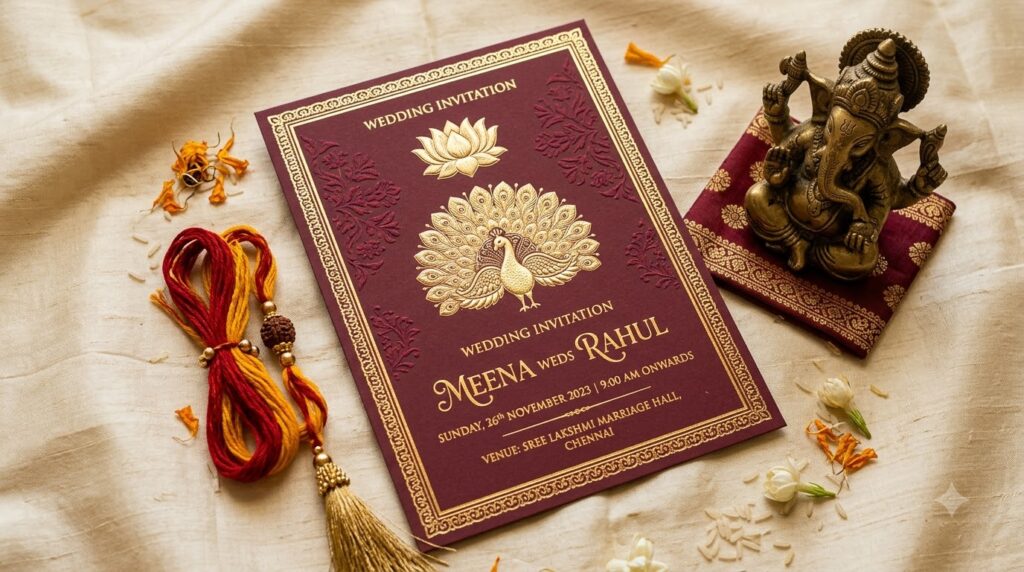
South Indian wedding design draws from a rich visual vocabulary steeped in spiritual meaning. The lotus, representing purity and divine beauty, appears frequently as a central motif or border element. Peacocks symbolize grace and the watchful protection of Goddess Saraswati. Mango leaves, used in torans that adorn doorways, signify fertility and new beginnings.
Colour choices carry deep cultural resonance. Red represents Shakti, the divine feminine energy, and appears prominently in bridal attire and decor. Gold signifies prosperity and the blessings of Goddess Lakshmi. Green connects to fertility and growth, while yellow echoes the sacred turmeric used in pre-wedding rituals. These hues combine in invitation designs to create visual harmony that feels both festive and spiritually grounded.
Geometric patterns like kolam designs add another layer of cultural authenticity. These intricate rice-flour drawings, traditionally created at thresholds to welcome guests, translate beautifully into digital borders and backgrounds. Their symmetry and complexity demonstrate the care and attention the family brings to every wedding detail, setting expectations for the celebration itself.
Traditional verses and blessings
Telugu and Tamil invitations typically open with a Ganapati shloka, invoking Lord Ganesha to remove obstacles and bless the union. This Sanskrit verse immediately establishes the spiritual foundation of the celebration. Even guests who do not understand the language recognize its sacred purpose and feel the reverence it conveys.
Family names and lineage receive formal acknowledgment in traditional formats. The invitation identifies the couple through their family trees, honoring parents and often grandparents by name. This practice reinforces the South Indian understanding that marriage unites not just two individuals but two entire families with their histories, values, and futures intertwined.
Closing blessings often reference specific deities or invoke general prosperity and happiness. Phrases like “With the blessings of Sri Venkateswara” or “By the grace of Goddess Meenakshi” connect the celebration to regional temple traditions. These references comfort elders and remind everyone that the marriage receives divine sanction and protection.
Regional design preferences
Telugu-style south indian wedding cards uk often feature Tirupati Balaji imagery or incorporate architectural elements from famous Andhra temples. The aesthetic tends toward rich, layered designs with substantial gold accents and formal typography. Hyderabadi influences might add Mughal-inspired archways or paisley patterns, reflecting the region’s cultural synthesis.
Tamil invitations frequently showcase Madurai Meenakshi temple motifs or Tanjore painting styles with their distinctive gold leaf work. The color palette may lean toward deeper reds and maroons, with liberal use of traditional checks and borders. Chettinad influences bring bold geometric patterns and a slightly more minimalist approach compared to Telugu designs.
Understanding these regional nuances helps families create invitations that feel authentically theirs. A Nellore family might emphasize different visual elements than a Coimbatore family, even while both honor broader South Indian traditions. This specificity transforms generic “Indian wedding” aesthetics into deeply personal cultural statements.
Language and bilingual options
Most UK South Indian families navigate multiple linguistic identities. Grandparents may be most comfortable with Telugu or Tamil, parents often bilingual, and children primarily English-speaking with varying heritage language fluency. Invitations must serve this entire spectrum without overwhelming any single group.
Effective bilingual design places English and the heritage language in complementary positions. Key information like date, time, and venue appears in both languages, while longer explanatory text might be English-only with cultural terms preserved in Telugu or Tamil. This balance ensures clarity while maintaining cultural authenticity.
Transliteration choices matter significantly. Should you write “Muhurtham” or “Muhurtam”? “Pellikuthuru” or “Pellikoduku”? Families often consult elders to ensure spelling aligns with their specific regional pronunciation. These small details demonstrate respect and attention that guests notice and appreciate.
PREMIUM PLATFORM
What You Actually Save: Print vs Digital
| Metric | Printed cards | Digital invitation | Savings |
|---|---|---|---|
| Time to get it ready | 40-60 hours | 2-3 hours | 37-58 hours |
| Total Cost for 250 Guests | GBP 625-1250 | GBP 49-99 | GBP 526-1201 |
| Time spent chasing RSVPs | 15-25 hours | 0.5 hours | 14.5-24.5 hours |
| How fast guests receive it | 4-6 weeks | Same day | 4-6 weeks faster |
| Wrong or missing addresses | 5-10% address errors | 0.1% delivery issues | 99.9% accuracy gain |
| When it pays for itself | N/A (baseline) | Month 2-3 | Positive from Month 2 |
MyShaadhi Link: Your Digital Shaadi Solution
Templates honouring South Indian aesthetics
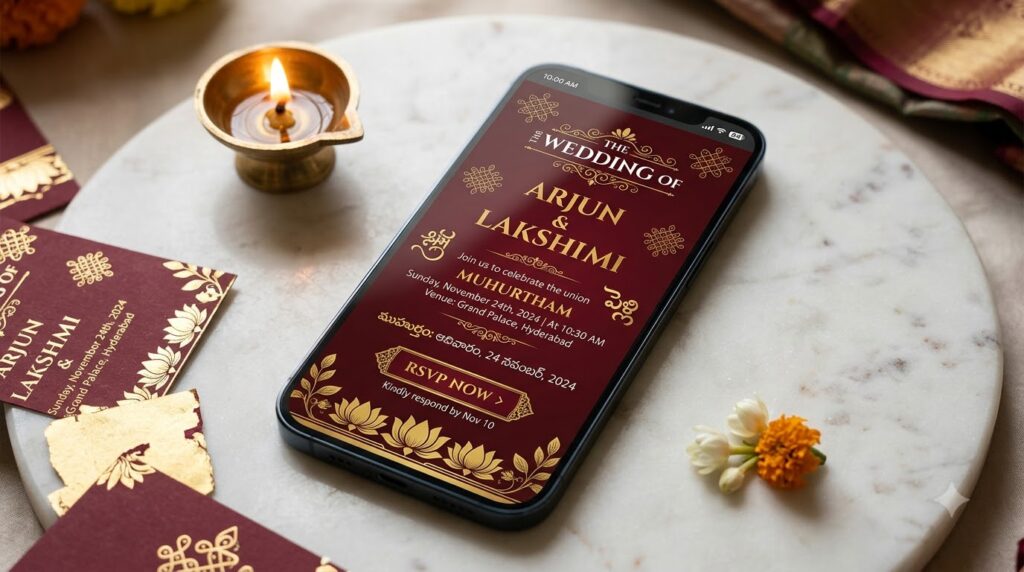
MyShaadhi Link designs south indian wedding cards uk and offers Telugu wedding templates crafted with cultural authenticity at their core. Each design incorporates traditional motifs, auspicious color palettes, and layouts that respect South Indian visual conventions. The platform understands that generic “Indian wedding” templates fail to capture regional specificity, so every option reflects deep cultural knowledge.
The template library spans styles from classical to contemporary. Families seeking traditional elegance find designs rich with gold borders, temple architecture, and formal Sanskrit verses. Those wanting modern interpretations discover cleaner layouts that honor cultural elements through subtle color choices and simplified motifs. Every option maintains the dignity and reverence South Indian weddings deserve.
Customization tools allow families to adjust templates without losing cultural integrity. You can modify color schemes to match your family’s regional preferences, swap motifs to emphasize specific deities, or adjust text layouts to balance bilingual content. The platform guides you toward choices that enhance rather than dilute cultural authenticity.
Live RSVP and guest tracking
MyShaadhi Link transforms guest management from spreadsheet chaos into streamlined clarity. Interactive RSVP features let guests respond with a single click, automatically updating your master list in real time. You see exactly who has confirmed, who has declined, and who has not yet responded, all from a single dashboard.
The system accommodates the complexity of South Indian weddings with multiple events. Guests can indicate which ceremonies they will attend, whether they need accommodation assistance, and how many family members will accompany them. This granular information helps you plan catering quantities, seating arrangements, and transportation logistics with confidence.
Automated tracking eliminates the endless follow-up calls that plague traditional planning. The platform sends gentle reminders to guests who have not responded, freeing you from awkward conversations. You can export guest lists filtered by response status, location, or event attendance, making vendor coordination effortless.
Countdown timers and venue maps
MyShaadhi Link invitations include custom wedding countdowns that build anticipation and keep your celebration top of mind. Guests see exactly how many days remain until the muhurtham, creating excitement while serving as a practical reminder to arrange travel and accommodations. The countdown becomes a shared experience that connects your community across distances.
Integrated venue maps solve one of the biggest guest pain points. British attendees unfamiliar with the wedding location can click directly to Google Maps or Apple Maps, receiving turn-by-turn directions from their current location. India-based guests get the same seamless navigation, ensuring everyone arrives on time and stress-free.
Additional practical features include parking information, public transport options, and nearby accommodation suggestions. These details reduce the number of individual questions you field, allowing you to focus on bigger planning decisions. Guests feel cared for and well-informed, setting a positive tone before they even arrive.
Seamless sharing across UK and India
MyShaadhi Link invitations work beautifully across devices and internet speeds, crucial for reaching guests in both countries. The platform optimizes load times so that relatives in rural Andhra Pradesh with slower connections experience the same visual richness as London guests on high-speed broadband. No one feels excluded due to technical limitations.
Sharing options accommodate different communication preferences. Guests can receive invitations via email, WhatsApp, or text message, with the platform tracking which method works best for each recipient. This flexibility ensures your invitation reaches everyone through their preferred channel, maximizing engagement and response rates.
The platform maintains consistent branding across all touchpoints. Whether guests view the invitation on a smartphone in Chennai or a desktop in Manchester, they see the same beautiful design and access the same information. This consistency reinforces your wedding’s identity and professionalism.
DESIGN MASTERY
Designing Your Perfect Wedding E-Invite
Choosing colours and imagery
Designing south indian wedding cards uk starts with your family’s regional and personal color preferences. If your mother envisions a traditional red and gold celebration, let those hues dominate your invitation palette. If you are planning a more contemporary aesthetic with pastels and metallics, ensure your choices still nod to cultural symbolism through accent colors or motif selections.
Imagery should balance beauty with meaning. Select photos that show you as a couple in settings that reflect your identity, whether that is a London landmark, a temple visit, or a family gathering. Avoid overly casual snapshots, instead choosing images that convey the celebration’s significance and formality.
Consider how colors render across devices and lighting conditions. Rich jewel tones that look stunning on your laptop might appear muddy on older smartphones. Test your design on multiple devices before finalizing, ensuring every guest experiences the visual impact you intend regardless of their technology.
Typography for bilingual text
Bilingual invitations require careful font pairing. Choose a serif font for Telugu or Tamil text that maintains readability at smaller sizes, paired with a complementary English font that shares similar weight and formality. Avoid overly decorative scripts that sacrifice legibility for style, especially for older guests with vision challenges.
Hierarchy guides the eye through information logically. Your names and the muhurtham date should be the most prominent elements, followed by venue details and RSVP instructions. Use size, weight, and color to create clear visual levels that help guests extract key information quickly.
Line spacing and text alignment matter more in bilingual designs. Telugu and Tamil scripts need slightly more vertical space than English to avoid crowding. Center alignment often works best for formal invitations, creating symmetry that feels balanced and traditional. Test readability on mobile screens where space is tightest.
Mobile-first design essentials
Most guests will first view your invitation on smartphones, making mobile optimization non-negotiable. Design with vertical scrolling in mind, placing the most important information in the top third of the screen. Avoid horizontal scrolling or tiny text that requires zooming, both of which frustrate users and reduce engagement.
Touch targets for buttons and links should be large enough for easy tapping. RSVP buttons, map links, and any interactive elements need generous spacing to prevent accidental clicks. This consideration improves user experience and increases the likelihood that guests will complete desired actions.
Load speed directly impacts guest perception. Compress images without sacrificing quality, use web-optimized formats, and minimize unnecessary animations that slow rendering. A beautiful invitation that takes 15 seconds to load on mobile data feels less premium than a simpler design that appears instantly.
Adding personal touches and family photos
Personal elements transform generic templates into unique expressions of your love story. Include a photo from your engagement, a favorite quote that resonates with both of you, or a short message explaining what the celebration means to your families. These touches create emotional connection and make guests feel truly invited rather than merely informed.
Family photos honor the people who shaped you. A small gallery showing both sets of parents, grandparents, or siblings acknowledges that this celebration belongs to your entire family. These images comfort relatives who cannot attend in person, helping them feel included despite distance.
Balance personalization with cultural formality. South Indian weddings maintain a certain dignity and reverence, so ensure personal touches enhance rather than undermine that tone. A tasteful engagement photo works beautifully, while casual vacation snapshots might feel out of place. Trust your instincts about what honors both your personality and your heritage.
Timing your digital send
Send invitations six to eight weeks before the wedding for UK guests, allowing time for travel arrangements and work leave requests. India-based guests may need even more notice if international travel is involved, so consider sending their invitations slightly earlier or providing preliminary date information through other channels.
Avoid sending invitations during major holidays or festival periods when inboxes overflow and your message might get lost. Similarly, weekday mornings tend to see higher open rates than weekend evenings when people are less likely to check email thoughtfully. Strategic timing increases engagement and response rates.
Plan for a follow-up sequence. Send the initial invitation, then a gentle reminder two weeks before the RSVP deadline, and a final reminder one week before. This cadence keeps your wedding top of mind without feeling pushy, and significantly improves response rates compared to single-send approaches.
GUEST COORDINATION
RSVP Tracking and Guest Management Made Easy
Real-time response dashboards
RSVP tracking removes the single most tedious job in a two-country wedding: chasing headcounts by phone across a five-and-a-half hour time difference. Real-time dashboards show you exactly where your planning stands at any moment, eliminating the anxiety of uncertainty. You see confirmed attendance numbers, outstanding responses, and dietary requirements all in one glance. This visibility matters most for south indian wedding cards uk with guest lists spanning multiple ceremonies and countries.
Visual analytics help you make informed decisions quickly. Charts showing response rates by location reveal whether your UK guests are responding faster than India-based relatives, prompting targeted follow-up. Attendance breakdowns by event help you allocate resources appropriately, ensuring you do not over-cater the mehendi or under-prepare for the reception.
Export functions transform data into actionable formats. Download guest lists filtered by table assignments, meal preferences, or accommodation needs, then share them directly with caterers, venues, or family members helping with logistics. This seamless information flow prevents the miscommunications that plague spreadsheet-based tracking.
Dietary and accessibility notes
Modern RSVP systems capture nuanced guest needs that traditional response cards miss. Guests can specify vegetarian, vegan, gluten-free, or allergy requirements directly in their response, giving caterers precise information weeks in advance. This attention to detail ensures everyone feels welcomed and cared for.
Accessibility information helps you plan inclusive celebrations. Guests can indicate mobility needs, hearing or vision accommodations, or other requirements that affect seating and venue navigation. Collecting this information early allows you to work with venues on appropriate arrangements rather than scrambling with last-minute adjustments.
Plus-one management becomes transparent and fair. Your system can specify which guests may bring partners or children, preventing awkward conversations about unexpected additions. Guests see clearly what is invited, reducing confusion and helping you maintain accurate headcounts for catering and seating.
Managing UK and India guest lists
Segment your guest list by geography to tailor communication and logistics. UK guests might need detailed parking information and hotel recommendations, while India-based guests need airport transfer details and local accommodation options. Separate tracking ensures each group receives relevant information without clutter.
Time zone considerations affect follow-up timing. Schedule reminder emails to reach UK guests during their morning hours and India guests during theirs, maximizing the chance they will see and respond to your message promptly. This small adjustment significantly improves engagement rates.
Currency and payment coordination simplifies when you track guest locations. If you are collecting contributions for group gifts or coordinating shared transportation, knowing who is in which country helps you set up appropriate payment methods and avoid confusion over exchange rates or transfer fees.
Automated reminders and follow-ups
Automated systems eliminate the emotional burden of chasing responses. Pre-scheduled reminders go out at intervals you set, gently prompting guests without requiring you to track who needs nudging. This automation preserves relationships by removing the awkwardness of repeated personal follow-ups.
Personalized reminder messages maintain warmth despite automation. Systems can insert guest names, reference specific events they have not yet confirmed, and adjust tone based on your relationship. The result feels thoughtful rather than robotic, encouraging responses without causing offense.
Final confirmation reminders sent one week before the wedding catch last-minute changes and reduce no-shows. These messages serve as helpful prompts for guests to finalize travel plans and remind them of any items they need to bring, like specific attire for certain ceremonies.
COMMUNITY VOICES
Real UK Families Share Their Digital Invite Stories
How digital invites saved time and stress
Priya and Karthik from Leicester planned their wedding while both working full-time demanding jobs. Traditional card printing would have required multiple vendor meetings, proof approvals, and coordination with calligraphers for Telugu text. Instead, they designed their digital invitation over two evenings, sent it to 280 guests across three continents, and had 70 percent of responses within five days.
The couple particularly valued the ability to update details as plans evolved. When their mandap decorator suggested moving the ceremony start time by 30 minutes to optimize natural lighting, they updated their digital invitation instantly. Every guest received the change notification, preventing the confusion that would have resulted from printed cards with outdated information.
Priya notes that the time savings allowed them to focus on elements that mattered more personally. Rather than spending weekends addressing envelopes, they invested that energy in choreographing their sangeet performance and personalizing welcome bags for out-of-town guests. The digital invitation handled logistics so they could focus on creating meaningful experiences.
Guest feedback and engagement
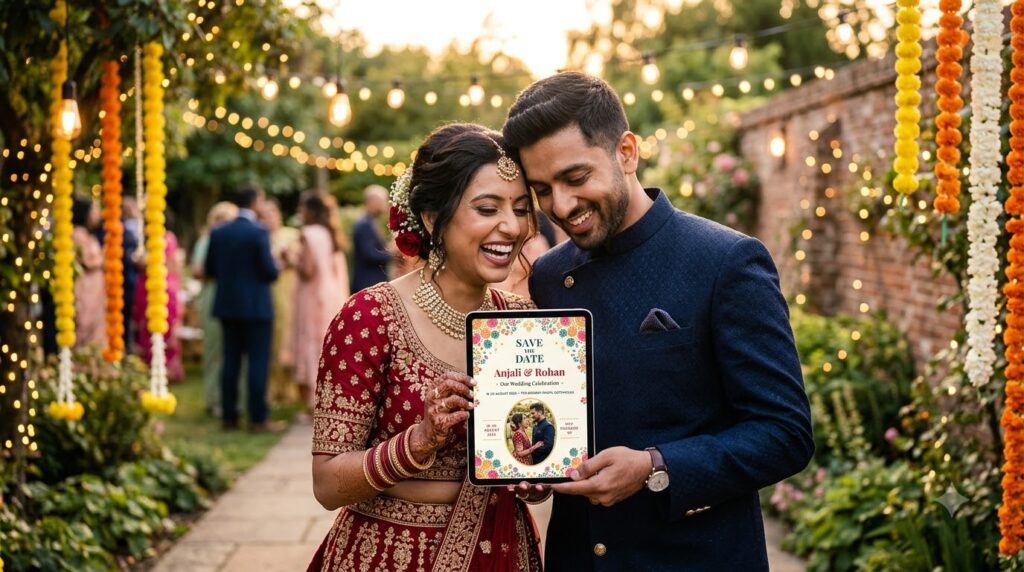
Bilingual, culturally-designed invitations land differently with British South Asian families — elders read the Telugu or Tamil text, younger guests skim the English. Ananya and Ravi from Birmingham received overwhelmingly positive feedback about their animated invitation featuring a digital kolam that guests could interact with by tapping their screens, proof that well-crafted south indian wedding cards uk resonate across generations.
Older relatives initially skeptical about digital formats changed their minds after seeing the beautiful design and easy navigation. Ravi’s grandmother in Vijayawada, who had never used email extensively, found the WhatsApp version simple to access and loved the video message the couple included. She watched it repeatedly and shared it with her friends, becoming an unexpected champion of the format.
Younger guests appreciated the environmental consciousness and modern approach. Several friends mentioned that the digital invitation felt more aligned with the couple’s values and professional identities. The format sparked conversations about sustainability and tradition, deepening engagement with the wedding’s meaning beyond simple attendance confirmation.
Blending tradition with technology
Meera and Aditya from Manchester created a hybrid approach that honored both sets of parents’ preferences. They sent digital invitations to their 300-guest list but printed 20 special editions on handmade paper for grandparents, parents, and the priest. These physical cards became ceremonial keepsakes while the digital versions handled practical communication.
The couple found that explaining their approach helped family members understand the thoughtfulness behind it. They emphasized that choosing digital formats did not mean abandoning tradition but rather adapting it to serve their community better. This framing helped skeptical relatives see technology as a tool for preserving rather than replacing cultural practices.
Their wedding day proved the success of their approach. Every guest arrived on time with clear understanding of the schedule, dietary preferences had been communicated accurately to caterers, and the RSVP count matched actual attendance within three people. The seamless logistics allowed everyone to focus on celebration rather than confusion, exactly as the couple had hoped.
Frequently Asked Questions
What are south Indian wedding cards in the UK?
South Indian wedding cards in the UK are cultural artifacts that honor Telugu and Tamil traditions. They serve as sacred documents that invoke blessings and mark the union of two families, bridging geographical gaps while maintaining cultural authenticity.
How do digital invites differ from traditional wedding cards?
Digital invites offer significant advantages over traditional wedding cards, including cost savings of up to 80%. They also allow for real-time guest management, making planning easier and more efficient for families navigating the diaspora experience.
Can I include cultural elements in my wedding e-invite?
Absolutely! Including cultural elements like Ganapati invocations or traditional motifs in your wedding e-invite enhances its significance. This ensures the invitation resonates with both younger and older generations, preserving cultural identity in your celebration.
When should I send south Indian wedding cards?
It is advisable to send south Indian wedding cards at least 6-8 weeks before the wedding date. This timeline allows guests ample time to arrange travel and accommodations, especially when coordinating across different time zones.
Is RSVP tracking available for wedding e-invites?
Yes, RSVP tracking is a key feature of wedding e-invites. This functionality allows couples to manage guest lists efficiently, ensuring they can plan accordingly and maintain communication with guests leading up to the celebration.
Why choose digital invitations for South Indian weddings?
Choosing digital invitations for South Indian weddings simplifies logistics and reduces costs significantly. They preserve cultural authenticity while allowing for real-time guest management, making the planning process smoother for families in the diaspora.
 Tamil Weddings
Kovil Pathirikai: 7 Sacred Tips for a Beautiful Tamil Wedding
Key Takeaway: A kovil pathirikai wedding invitation is more than stationery; it is a sacred announcement that carries centuries of […]
Read article telugu-weddings
Pellikuthuru: 7 Sacred Rituals for a Beautiful Telugu Bride
Pellikuthuru is the sacred Telugu ritual where the bride is bathed in turmeric, anointed, and blessed by family before her wedding. Here’s the complete guide to its meaning, rituals, and planning.
Read article Invitation Ideas
Temple Wedding Invitation Wording: Best Guide (2026)
Key Takeaway: A temple wedding invitation is far more than a card announcing a date and venue. It is the […]
Read articleReady to create your wedding invitation?
Explore our handcrafted templates — designed for South Indian, Christian, and modern weddings. Share via WhatsApp in minutes.
Browse Templates